Amazon built its hyper efficient warehouses by embracing chaos — Quartz

Good look at how Amazon takes advantage of randomness in its warehouses.

Amazon has completely redefined warehouse efficiency and customer convenience. Through its Prime membership, it has promised tens of millions of customers free two-day shipping on more than 100 million products, and, last year, it shipped 5 billion items to them. “That was the major innovation,” says Daniel Theobald, who cofounded a warehouse robotics company called Vecna in 1998 and counts major retailers and logistics companies as clients. “As soon as people realized, you can order something and get it tomorrow, that turned the industry upside down.”

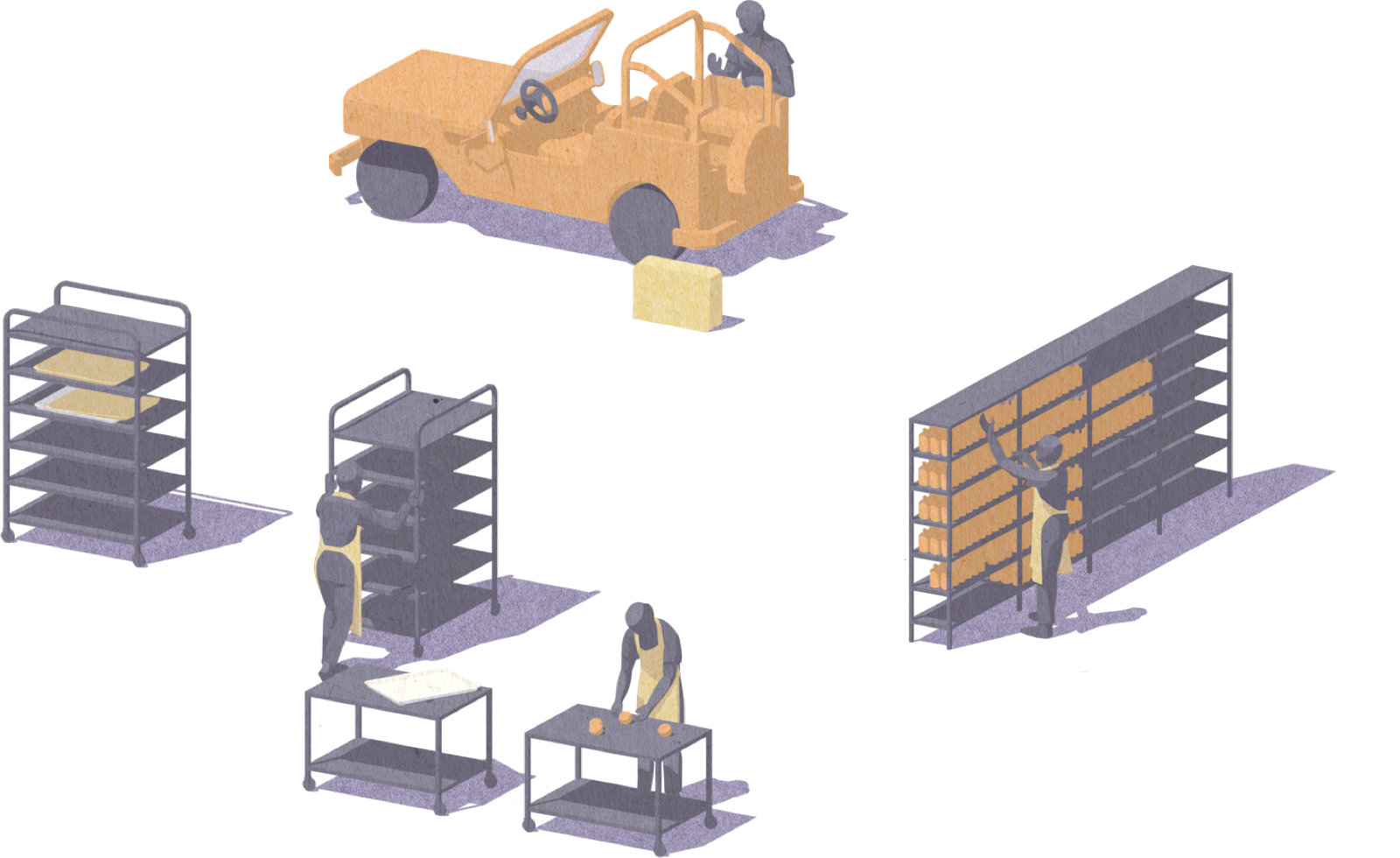
The core of this disruptive efficiency, though, is not Amazon’s automated shelf-moving warehouse robots, which is the innovation that gets the most attention. And it isn’t, on its surface, something that you would associate with a well-oiled machine. It’s not even a breakthrough technology. In fact, some version of it was already in place when Alperson worked in Amazon’s early warehouses.

What makes Amazon’s warehouse work is the way they organize inventory: with complete randomness.

Source: Amazon built its hyper efficient warehouses by embracing chaos — Quartz

U.S. Has Been Secretly Watching Russia’s Nuclear-Powered Cruise Missiles Crash and Burn – The Drive

Good luck with that, Pootie-Poot.

Russia’s President Vladimir Putin publicly announced the as yet unnamed missile in an annual speech on March 1, 2018. The Kremlin says it successfully tested one of the weapons near the end of 2017 and released video footage claiming to show the launch and it in flight. So far, Russian authorities have not released any other significant details about the weapon’s configuration or capabilities, though Putin implied that the final design would be broadly similar in size and shape to the existing, conventionally-powered Kh-101 cruise missile.

At the most basic conceptual level, the weapon could conceivably reach supersonic speeds, fly at very low altitudes, and have effectively unlimited range thanks to its nuclear powerplant, allowing it to hit targets anywhere in the world with little warning and dodge anti-missile defenses.

But shortly after Putin’s address, CNN, in a story citing an anonymous U.S. government official, cast doubt on the possibility that this weapon was anywhere near operational. That individual added that the “United States had observed a small number of Russian tests of its nuclear-powered cruise missile and seen them all crash.” Fox News said its own sources indicated the same thing, that the weapon was in the research and development phase and that at least one had crashed during testing in the arctic.

Source: U.S. Has Been Secretly Watching Russia’s Nuclear-Powered Cruise Missiles Crash and Burn – The Drive

‘A Total F***-up’: Russian Mercenaries in Syria Lament U.S. Strike That Killed Dozens

Russian mercenaries in Syria tried to attack Americans. The U.S. Army kicked their asses. Putin talks a good game but when push comes to shove we win.

Recordings have emerged in which Russian mercenaries subjected to a joint U.S. strike that killed dozens of their comrades describe the incident as “a total fuck-up.”

Polygraph.info, a Voice of America project, published three recordings, which it received from a source close to the Kremlin. The source said that the recorded phone calls were made by personnel from CHVK Wagner, a Russian private military company.

The incident in question occurred on the night and early morning of Feb. 7-8, when Syrian government forces—backed by Russian mercenaries employed by CHVK Wagner—attempted to capture an oil refinery near the Syrian city of Deir Ezzor. After Russian personnel came into contact with American troops stationed there, the U.S. forces responded with artillery and air strikes.

Source: ‘A Total F***-up’: Russian Mercenaries in Syria Lament U.S. Strike That Killed Dozens

Back Pain May Be The Result Of Bending Over At The Waist Instead Of The Hips : Shots – Health News : NPR

It seems that Americans bend over all wrong. Learn how to hip-hinge, a more natural way to bend. Fascinating!

To see if you’re bending correctly, try a simple experiment.

“Stand up and put your hands on your waist,” says Jean Couch, who has been helping people get out of back pain for 25 years at her studio in Palo Alto, Calif.

“Now imagine I’ve dropped a feather in front of your feet and asked to pick it up,” Couch says. “Usually everybody immediately moves their heads and looks down.”

That little look down bends your spine and triggers your stomach to do a little crunch. “You’ve already started to bend incorrectly — at your waist,” Couch says. “Almost everyone in the U.S. bends at the stomach.”

In the process, our backs curve into the letter “C” — or, as Couch says, “We all look like really folded cashews.”

In other words, when we bend over in the U.S., most of us look like nuts!But in many parts of the world, people don’t look like cashews when they bend over. Instead, you see something very different.

Source: Back Pain May Be The Result Of Bending Over At The Waist Instead Of The Hips : Shots – Health News : NPR

The Deep State Takes Out the White House’s Dark Clown Prince

If you’ve ever filled out a form SF-86 for a U.S. government security clearance, you’ll know the hassle of dealing with the sheer volume of information it entails. Listing contacts, personal, financial, and travel information in enormous, painstaking detail isn’t trivial, and even small errors will get the form kicked back to you or your clearance rejected. Applicants are required to spell out in great detail the specifics of foreign travel and overseas contacts. Investigators need to know where you’ve made your money and to whom you have debts.

I did it in my early twenties when my life was relatively uncomplicated, and it was still a pain in the ass. It’s not easy, and it’s not supposed to be.

It’s even harder when you’re a corrupt, entitled snake who repeatedly lies about your finances to federal investigators and serves as a living, breathing poster child for privileged venality. It’s even harder when you’ve rather clumsily attempted to use both your familial relationship and proximity to the president of the United States to save your family’s failing real-estate empire.

All of which helps explain Jared Kushner’s very bad day on Tuesday. White House Chief of Staff John Kelly, a man who has compromised himself and his supposed values to accommodate and indulge President Trumphausen’s various whims, impulses, urges, feuds, and paranoid episodes, finally drew the line and busted Kushner’s security clearance down from TS/SCI to Walmart Greeter Background Check (Provisional).

Source: The Deep State Takes Out the White House’s Dark Clown Prince

There’s a better way to use a standing desk | Popular Science

I’m a little skeptical that a standing desk could be worse for you than sitting on your ass all day. I’m certainly not going to take as gospel a study with a mere 20 participants in it. As for the Canadian study, I have my doubts, too, but need to delve further into the science.

Often I think these studies are driven by the disdain that Sitters often show towards Standers. Desk discrimination is what it is.

There’s always that one person in the office—you know the one. The one with the standing desk. Whenever you happen to pass their cube you think, wow, there’s a person being proactive about their health. There’s someone fighting the good fight against modern society’s unavoidably sedentary lifestyle. Good on them, bad on me.

But is that really true? A growing body of evidence suggests that yes, sitting for long periods of time can have a detrimental effect on your health. But unfortunately, standing for large spans of the day isn’t that great either. And a recent study adds to this pile. This month in the journal Ergonomics, researchers report that when they had 20 participants stand for two hours at a time, subjects showed an apparent increase in lower limb swelling and decreased mental state.

Source: There’s a better way to use a standing desk | Popular Science

Roads to nowhere: how infrastructure built on American inequality | Cities | The Guardian

This is a shocking, eye-opening look at the systemic racism in 1940s America. I had no idea this went on. On the bright side (and recognizing that we still have a lot of work to do) we have come a long way as a society.

It’s a little after 3pm in Detroit’s 8 Mile neighbourhood, and the cicadas are buzzing loudly in the trees. Children weave down the pavements on bicycles, while a pickup basketball game gets under way in a nearby park. The sky is a deep blue with only a hint of an approaching thunderstorm – in other words, a muggy, typical summer Sunday in Michigan’s largest city.

“8 Mile”, as the locals call it, is far from the much-touted economic “renaissance” taking place in Detroit’s centre. Tax delinquency and debt are still major issues, as they are in most places in the city. Crime and blight exist side by side with carefully trimmed hedgerows and mowed lawns, a patchwork that changes from block to block. In many ways it resembles every other blighted neighbourhood in the city – but with one significant difference. Hidden behind the oak-lined streets is an insidious piece of history that most Detroiters, let alone Americans, don’t even know exists: a half mile-long, 5ft tall concrete barrier that locals simply call “the wall”.

Source: Roads to nowhere: how infrastructure built on American inequality | Cities | The Guardian

Lessons on Aging Well, From a 105-Year-Old Cyclist – The New York Times

Monsieur Marchand is my new hero.

At the age of 105, the French amateur cyclist and world-record holder Robert Marchand is more aerobically fit than most 50-year-olds — and appears to be getting even fitter as he ages, according to a revelatory new study of his physiology.

The study, which appeared in December in The Journal of Applied Physiology, may help to rewrite scientific expectations of how our bodies age and what is possible for any of us athletically, no matter how old we are.Many people first heard of Mr. Marchand last month, when he set a world record in one-hour cycling, an event in which someone rides as many miles as possible on an indoor track in 60 minutes.

Mr. Marchand pedaled more than 14 miles, setting a global benchmark for cyclists age 105 and older. That classification had to be created specifically to accommodate him. No one his age previously had attempted the record.

Mr. Marchand, who was born in 1911, already owned the one-hour record for riders age 100 and older, which he had set in 2012.

It was as he prepared for that ride that he came to the attention of Veronique Billat, a professor of exercise science at the University of Evry-Val d’Essonne in France. At her lab, Dr. Billat and her colleagues study and train many professional and recreational athletes.
Continue reading

Radiation Will Tear Elon Musk’s Rocket Car to Bits in a Year

Plastics expert Dr. William Carroll of Indiana University says Elon Musk’s Starman Tesla is no match for the rough-and-tumble environment of space.

The real forces that will tear the car apart over hundreds of millions of years in space, Carroll said, are solid objects and — most importantly — radiation.

Even if the car avoids any major collisions, over very long time horizons, it’s unlikely the vehicle could avoid the kind of collisions with micrometeorites that leave other space junk riddled with craters over time, Carroll said.

But assuming those collisions don’t completely tear the car apart, the radiation will.

Down on Earth, a powerful magnetic field and the atmosphere largely protect human beings (and Tesla Roadsters) from the harsh radiation of the sun and cosmic rays. But spacefaring objects have no such protections.

Source: Radiation Will Tear Elon Musk’s Rocket Car to Bits in a Year

“This Is Serious”: Facebook Begins Its Downward Spiral | Vanity Fair

Years ago, long before Mark Zuckerberg became Mark Zuckerberg, the young founder reached out to a friend of mine who had also started a company, albeit a considerably smaller one, in the social-media space, and suggested they get together. As Facebook has grown into a global colossus that connects about a third of the globe, Zuckerberg has subsequently assumed a reputation as an aloof megalomaniac deeply out of touch with the people who use his product. But back then, when he only had 100 million users on his platform, he wasn’t perceived that way. When he reached out to my friend, Zuckerberg was solicitous. He made overtures that suggested a possible acquisition—and once rebuffed, returned with the notion that perhaps Facebook could at least partner with my friend’s company. The chief of the little start-up was excited by the seemingly harmless, even humble, proposition from the growing hegemon. Zuckerberg suggested that the two guys take a walk.

Taking a walk, it should be noted, was Zuckerberg’s thing. He regularly took potential recruits and acquisition targets on long walks in the nearby woods to try to convince them to join his company. After the walk with my friend, Zuckerberg appeared to take the relationship to the next level. He initiated a series of conference calls with his underlings in Facebook’s product group. My friend’s small start-up shared their product road map with Facebook’s business-development team. It all seemed very collegial, and really exciting. And then, after some weeks passed, the C.E.O. of the little start-up saw the news break that Facebook had just launched a new product that competed with his own.

Source: “This Is Serious”: Facebook Begins Its Downward Spiral | Vanity Fair