Goldman asks: ‘Is curing patients a sustainable business model?’

When I first confronted my GERD stomach issues a few decades ago I had a choice: I could simply take an antacid pill each day for life or I could get surgery to fix it. The pill would’ve been easy, painless, and relatively inexpensive but I chose the surgery simply because I didn’t want to be dependent on Big Pharma.

This Golden Sachs analyst’s remarkable candor shows, in a nutshell, what’s wrong with a capitalistic health care system. What’s good for the patient is not always good for the investor. In fact, pretty frequently it’s not.

If you had any illusions about the true motivation of the medical industry you should now know the truth.

Wall Street greed is often why we can’t have nice things.
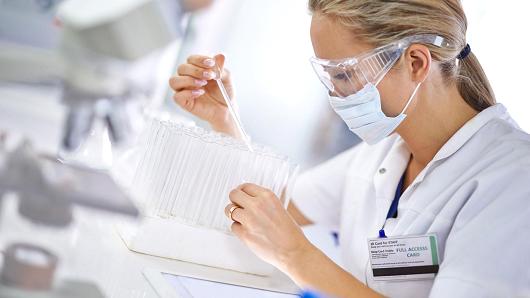
Goldman Sachs analysts attempted to address a touchy subject for biotech companies, especially those involved in the pioneering “gene therapy” treatment: cures could be bad for business in the long run.

“Is curing patients a sustainable business model?” analysts ask in an April 10 report entitled “The Genome Revolution.”

“The potential to deliver ‘one shot cures’ is one of the most attractive aspects of gene therapy, genetically-engineered cell therapy and gene editing. However, such treatments offer a very different outlook with regard to recurring revenue versus chronic therapies,” analyst Salveen Richter wrote in the note to clients Tuesday. “While this proposition carries tremendous value for patients and society, it could represent a challenge for genome medicine developers looking for sustained cash flow.”

Source: Goldman asks: ‘Is curing patients a sustainable business model?’
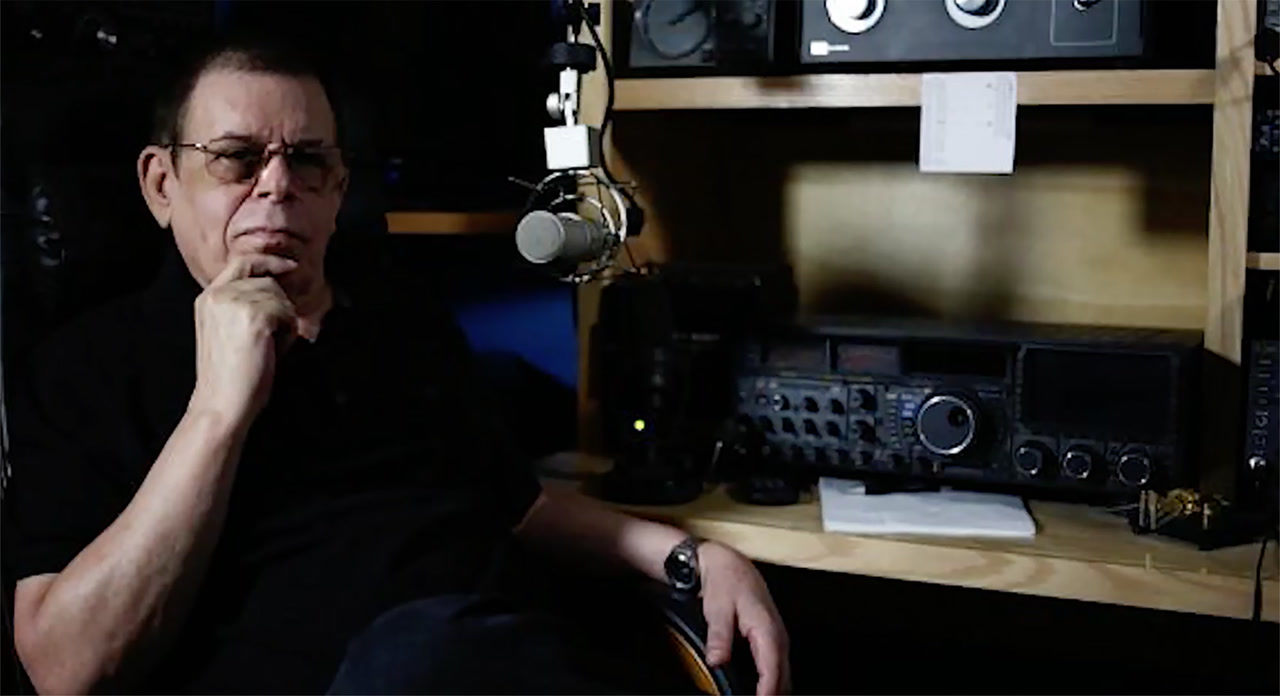
Pahrump-based radio host Art Bell dies at 72 – Las Vegas Review-Journal

North Carolina native, talk show pioneer, and fellow explorer Art Bell has passed away, or as we in the amateur radio field say, W6OBB is now a “silent key.”

I started listening to Art Bell’s Coast to Coast show back around 1995. Much of what I heard was off-the-wall nonsense but some of it was truly amazing. Life-changing amazing, in fact.

He was always a gentleman on the airwaves, no matter whom was his guest. In the depths of those dark nights you always felt like you had a friend out there, somewhere in the desert of Nevada.

Thanks for all the stimulating conversation and for shining a light on some of the most interesting topics imaginable.

He was awake when most of the country was asleep, cultivating a loyal following while sharing his fascination with the unexplained on his nighttime paranormal-themed show.

For the better part of two decades, longtime late-night radio personality Art Bell was his own producer, engineer and host of his show, “Coast to Coast AM.” He later launched his own satellite radio program from his Pahrump home after retiring from full-time hosting duties in 2003.

On the airwaves, Bell captivated listeners with his fascination for the unexplained, such as UFOs, alien abductions and crop circles. He died Friday at his home at the age of 72.

“As he begins his journey on the ‘other side,’ we take solace in the hope that he is now finding out all of the answers to the mysteries he pursued for so many nights with all of us,” Coast to Coast said in a statement Saturday.

Source: Pahrump-based radio host Art Bell dies at 72 – Las Vegas Review-Journal

Cambridge Analytica: links to Moscow oil firm and St Petersburg university | News | The Guardian

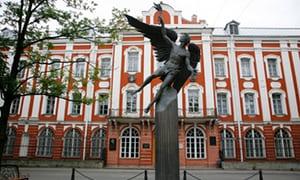
Surprise! Russian-born Cambridge professor Aleksandr Kogan has ties to St. Petersburg and did work for the Russian oil firm Lukoil (if not others). He claims he’s just a scapegoat but he certainly is looking more and more like a key player in Russian election meddling.

I wonder how North Carolina Senator Thom Tillis feels about getting elected with potentially Russian help?

Aleksandr Kogan, the Cambridge University academic who orchestrated the harvesting of Facebook data, had previously unreported ties to a Russian university, including a teaching position and grants for research into the social media network, the Observer has discovered. Cambridge Analytica, the data firm he worked with – which funded the project to turn tens of millions of Facebook profiles into a unique political weapon – also attracted interest from a key Russian firm with links to the Kremlin.Energy firm Lukoil, which is now on the US sanctions list and has been used as a vehicle of government influence, saw a presentation on the firm’s work in 2014. It began with a focus on voter suppression in Nigeria, and Cambridge Analytica also discussed “micro-targeting” individuals on social media during elections.The revelations come at a time of intense US scrutiny of Russian meddling in the 2016 US presidential election, with 13 Russians criminally charged last month with interfering to help Donald Trump.

In Britain, concerns about Russian propaganda have been mounting, with the prime minister, Theresa May, recently attacking Russia for spreading fake news, accusing Moscow of attempts to “weaponise information” and influence polls.

Lukoil, Russia’s second-largest oil company, discussed with Cambridge Analytica the data company’s powerful social media marketing system, which was already being deployed for Republican Ted Cruz in the US presidential primaries and was later used to back Brexit and Trump.

Source: Cambridge Analytica: links to Moscow oil firm and St Petersburg university | News | The Guardian

Aleksandr Kogan: The psychologist at the centre of Facebook’s data scandal, Europe News & Top Stories – The Straits Times

In a video published online in September, a social scientist named Alex Spectre made an earnest pitch for his new startup.Clad in the Silicon Valley uniform of open-collar shirt and blazer, Spectre boasted that his company – Philometrics – would revolutionise the way online surveys were done, making it easier for companies to design questionnaires that people would actually respond to on Facebook, Twitter or other sites.

Crucially, he said, the surveys could predict the responses for large groups from a small number of respondents and micro-target ads better.”The reality is working with big data, social media is incredibly difficult,” said Spectre, who more commonly goes by Aleksandr Kogan, which he uses in his role as a Cambridge University researcher.

“You want to work with people who have a lot of experience. You want to connect with people who have been working with these massive data sets.”

Kogan would know. On Friday (March 16), he was suspended by Facebook Inc. for his earlier work mining data on what the New York Times reported was as many as 50 million Facebook users and sharing it with Cambridge Analytica, a political-advertising firm that helped Donald Trump win the 2016 US presidential election.

Source: Aleksandr Kogan: The psychologist at the centre of Facebook’s data scandal, Europe News & Top Stories – The Straits Times

Russian spy: This is how nerve agent Novichok destroys your mind and body, even if you survive | The Independent

If Sergei and Yulia Skripal survive being poisoned by Novichok nerve agent, they may be left suffering illnesses that ruin their lives – which may be the point of the attack, security experts have warned.

The case of a Russian military scientist accidentally exposed to Novichok appears to show that even surviving the effects of the supertoxic nerve agent is horrific.

Andrei Zheleznyakov was said to have been injected with an antidote almost immediately, but a friend said he still went from being a jovial, creative man to suffering “chronic weakness, toxic hepatitis, epilepsy, severe depression and an inability to concentrate”, before dying five years later.

Source: Russian spy: This is how nerve agent Novichok destroys your mind and body, even if you survive | The Independent

Soviet Scientist Who Developed Novichok Poison Used on Sergei Skripal: ‘I’m Sorry’

The person who understands the effects of novichoks best is Vil Mirzayanov, a scientist and later head of Foreign Technical Counterintelligence at the State Scientific Research Institute of Organic Chemistry and Technology (GosNIIOKhT) in Moscow in the 1970s and 1980s, which allegedly produced the shadowy class of binary nerve agents known as the “novichoks” (newcomers). And he has a message for Skripal and his daughter: my bad.

“I’d tell him [Skripal] that I’m very sorry that I participated in the development of these weapons,” Mirzayanov told The Daily Beast.

GosNIIOKhT scientists developed the agents under a program codename “Folio” beginning in the 1980s. Mirzayanov spoke out about the covert program as the Soviet Union fell, earning him a prison term at home before he escaped to exile in the United States.

During the Cold War, the idea that a novichok agent would be used in a covert assassination seemed alien to Mirzayanov and his fellow scientists. The weapons, developed in intense secrecy by Soviet scientists, were originally designed for use in bombs and shells on a battlefield rather than a cloak-and-dagger assassination in a suburb in southern England.

“I couldn’t imagine. No one could imagine. It’s outrageous. We were convinced at the time that we were developing these weapons and testing others for the protection of the country and for defense,” Mirzayanov said. “It was not our goal. None of the scientists supposed that it would be used with terrorist goals. It was a military thing. It was a weapon for mass killing.”

Source: Soviet Scientist Who Developed Novichok Poison Used on Sergei Skripal: ‘I’m Sorry’

American General In Syria Confirms US Forces Killed Hundreds Of Russians In Massive Battle – The Drive

Remember that rumor of a Russian attack on U.S. forces in Syria? Apparently it’s more than a rumor.

I’m not sure what Putin was thinking here. Did he think he could get away with it?

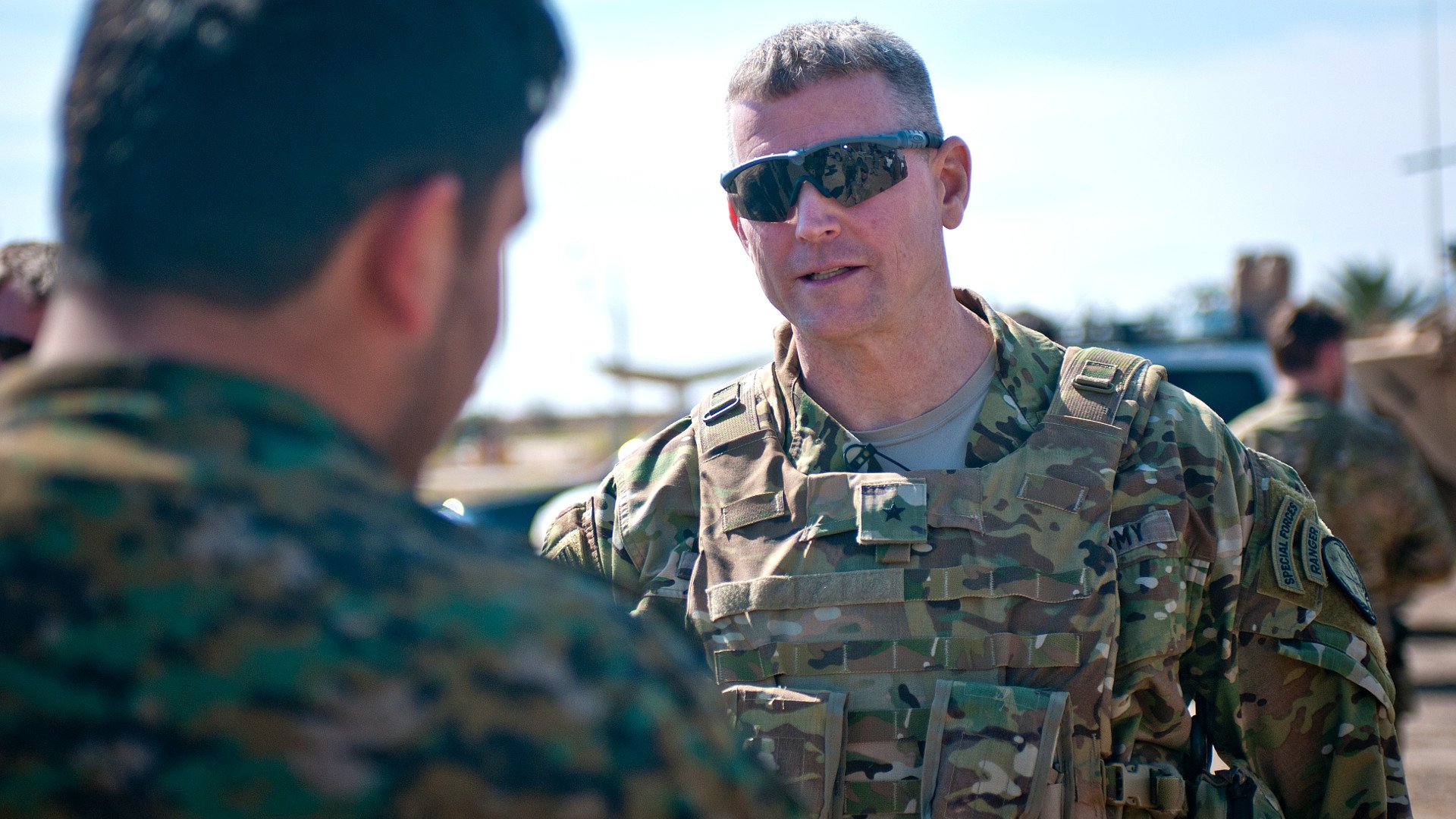
A senior U.S. general appears to have confirmed that hundreds of Russians fought – and died – in a major battle against American forces and their local counterparts in Syria. More importantly, U.S. Army Brigadier General Jonathan Braga, director of operations for the main U.S. military task force in charge of operations in Iraq and Syria, said he feared the situation could have escalated into an all-out conflict with Russia, something we at The War Zone have warned repeatedly is becoming a worryingly realistic possibility.

Braga gave the surprisingly candid account of what had happened to NBC’s Richard Engel, who traveled with the general to visit the exact site of the incident in Syria and to see what the U.S. military was doing to improve its defensive posture.

Source: American General In Syria Confirms US Forces Killed Hundreds Of Russians In Massive Battle – The Drive

Ex-Russian Chemical Weapons Specialist: Moscow Was Sure No One Would Find Poison

Vil Mirzayanov is a Russian emigre to the U.S. and chemical weapons specialist who helped develop the poison believed to have been used in the attack in Britain on Sergei Skripal, a former colonel in the GRU, Russia’s military intelligence, and his daughter Yulia.

Mirzayanov spoke with VOA’s Russian service.

Q: You were involved in the development of unique Soviet chemical toxic substances of nerve agent, “Substance 33,” “A-232” and “?-234,” known today as “Novichok” (Newcomer). At the same time, you claim that no other country in the world except Russia has ever had such weapons. How were British investigators able to establish what kind of substance was used to poison Sergei Skripal?

Mirzayanov: To establish which chemical agent was used in this case, you need to have access to a powerful high-resolution mass spectrometer, in the library of which are the spectra of all known compounds. The sample taken is compared with those already known, and the computer indicates a spectrum with a 96 percent probability. That is, there can be no error here.

Source: Ex-Russian Chemical Weapons Specialist: Moscow Was Sure No One Would Find Poison

Ominous biosecurity trends under Putin

Regimes of all types throughout history have sought to harness science for war. As a result, otherwise beneficial technology can become ‘dual-use’. Biological weapons are among the starker examples: research meant to save lives is used to take them. Now, in the run up to elections in Russia, and with concerns mounting about the nation’s role globally, biological-weapons specialists Raymond Zilinskas and Philippe Mauger deliver Biosecurity in Putin’s Russia.

Bioweapons research in Russia and its environs extends back as far as 1928. It took off in the 1970s, for example through the infamous clandestine Biopreparat network. There, the Soviets weaponized pathogens including the smallpox and Marburg viruses and the anthrax bacterium Bacillus anthracis. Zilinskas and Mauger focus on the years 2012–16, when political tensions between Russia and the West intensified markedly. Concerned by apparent shifts in Russia’s pronouncements and actions regarding dual-use activities related to biosecurity, Zilinskas and Mauger write that they wish to “move the discussion over Russian compliance concerns to the public sphere”, where an evaluation based on evidence becomes possible.

Source: Ominous biosecurity trends under Putin

How a group of neighbors created their own Internet service | Ars Technica

When you live somewhere with slow and unreliable Internet access, it usually seems like there’s nothing to do but complain. And that’s exactly what residents of Orcas Island, one of the San Juan Islands in Washington state, were doing in late 2013. Faced with CenturyLink service that was slow and outage-prone, residents gathered at a community potluck and lamented their current connectivity.

“Everyone was asking, ‘what can we do?’” resident Chris Brems recalls. “Then [Chris] Sutton stands up and says, ‘Well, we can do it ourselves.’”

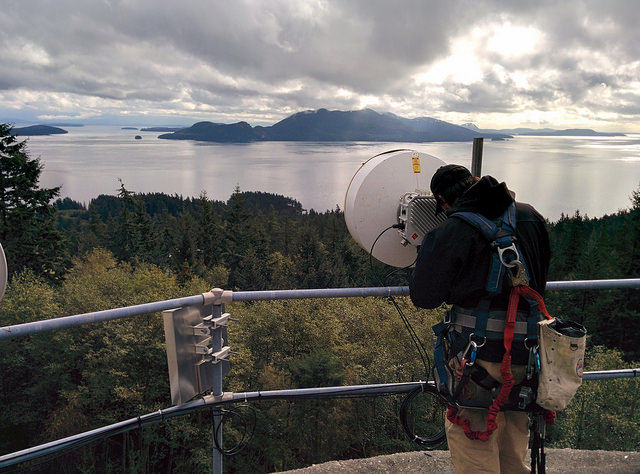
Doe Bay is a rural environment. It’s a place where people judge others by “what you can do,” according to Brems. The area’s residents, many farmers or ranchers, are largely accustomed to doing things for themselves. Sutton’s idea struck a chord. “A bunch of us finally just got fed up with waiting for CenturyLink or anybody else to come to our rescue,” Sutton told Ars.Around that time, CenturyLink service went out for 10 days, a problem caused by a severed underwater fiber cable. Outages lasting a day or two were also common, Sutton said.Faced with a local ISP that couldn’t provide modern broadband, Orcas Island residents designed their own network and built it themselves. The nonprofit Doe Bay Internet Users Association (DBIUA), founded by Sutton, Brems, and a few friends, now provide Internet service to a portion of the island. It’s a wireless network with radios installed on trees and houses in the Doe Bay portion of Orcas Island. Those radios get signals from radios on top of a water tower, which in turn receive a signal from a microwave tower across the water in Mount Vernon, Washington.

Source: How a group of neighbors created their own Internet service | Ars Technica