The East India Company: The original corporate raiders | William Dalrymple | World news | The Guardian

A lengthy but compelling account of the East India Company and the dangers of corporate rule.

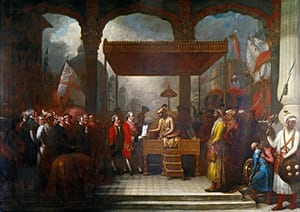
The painting shows a scene from August 1765, when the young Mughal emperor Shah Alam, exiled from Delhi and defeated by East India Company troops, was forced into what we would now call an act of involuntary privatisation. The scroll is an order to dismiss his own Mughal revenue officials in Bengal, Bihar and Orissa, and replace them with a set of English traders appointed by Robert Clive – the new governor of Bengal – and the directors of the EIC, who the document describes as “the high and mighty, the noblest of exalted nobles, the chief of illustrious warriors, our faithful servants and sincere well-wishers, worthy of our royal favours, the English Company”. The collecting of Mughal taxes was henceforth subcontracted to a powerful multinational corporation – whose revenue-collecting operations were protected by its own private army.

It was at this moment that the East India Company (EIC) ceased to be a conventional corporation, trading and silks and spices, and became something much more unusual. Within a few years, 250 company clerks backed by the military force of 20,000 locally recruited Indian soldiers had become the effective rulers of Bengal. An international corporation was transforming itself into an aggressive colonial power.

Source: The East India Company: The original corporate raiders | William Dalrymple | World news | The Guardian

Google Fiber not even offering TV in new rollouts

TV networks are as obsolete as rabbit ears

Google Fiber, noting America’s accelerating cord-cutting trend, today announced that it will not be offering television as part of its Louisville and San Antonio rollouts.

Think about that. A major, next-generation telecommunications provider has chosen to skip the video offerings, acknowledging that its customers just aren’t interested. Says Google:

If you’ve been reading the business news lately, you know that more and more people are moving away from traditional methods of viewing television content. Customers today want to control what, where, when, and how they get content. They want to do it their way, and we want to help them.

[…]

For our existing markets with TV as a part of their product offerings, nothing is changing — although more and more of you are choosing Internet-only options from Google Fiber. We’ve seen this over and over again in our Fiber cities.

I predicted back in 2009 (and again, and again, and again, and again, and again) that television networks and cable companies that don’t embrace Internet delivery are doomed:

Last week, I was describing to a friend who was new to Tivo how Tivo changes television. Through the magic of Tivo, MythTV, and similar DVRs, viewers have no use for TV networks anymore. We will watch (or stream) only the show they want and leave the rest. TV networks spend time assembling programming into a “channel” only to have that programming disassembled by Tivo. Eventually viewers will get wise and cut out the network middleman.

The traditional way of watching television is dead.
Continue reading

Four college basketball assistant coaches hit with federal fraud, corruption charges – CBSSports.com

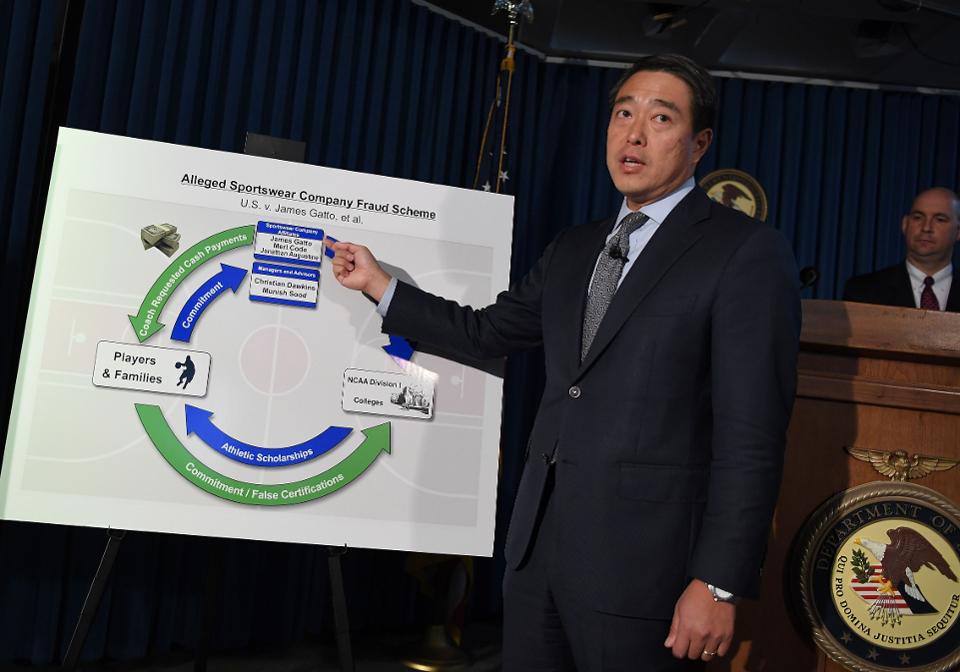
Acting US Attorney of New York, Joon H. Kim.

While the FBI’s charges of bribery and fraud are concerning, I am not at all shocked. In fact, I hope this leads to much-needed reform of college basketball – and why not all of college athletics, while we’re at it? Overlooked in this story is the fact that universities, cable TV networks (and, yes, shoe companies) are literally making billions of dollars off the labor of unpaid “student-athletes.”

College athletics is big business, undeniably. It’s all about the money now, the quaint idea of a “student-athlete” be damned. We shouldn’t be so shocked at the flow of money as we are that none of it flows to those who deserve it most: the athletes. It’s time to stop this farce once and for all.

The United States Attorney’s Office for the Southern District of New York announced early Tuesday that charges of fraud and corruption have been brought against four current college basketball assistant coaches — namely Arizona’s Emanuel “Book” Richardson, Auburn’s Chuck Person, Oklahoma State’s Lamont Evans and USC’s Tony Bland. Managers, financial advisers and representatives of a major sportswear company have also been charged with federal crimes in a scandal that has rocked the sport.”

The picture of college basketball painted by the charges is not a pretty one,” Joon H. Kim, the acting United States Attorney for the Southern District of New York, said at a Tuesday afternoon press conference. “Coaches at some of the nation’s top programs taking cash bribes, managers and advisers circling blue-chip prospects like coyotes, and employees of a global sportswear company funneling cash to families of high school recruits. … For the 10 charged men, the madness of college basketball went well beyond the Big Dance in March. Month after month, the defendants exploited the hoop dreams of student-athletes around the country, allegedly treating them as little more than opportunities to enrich themselves through bribery and fraud schemes.”

Source: Four college basketball assistant coaches hit with federal fraud, corruption charges – CBSSports.com

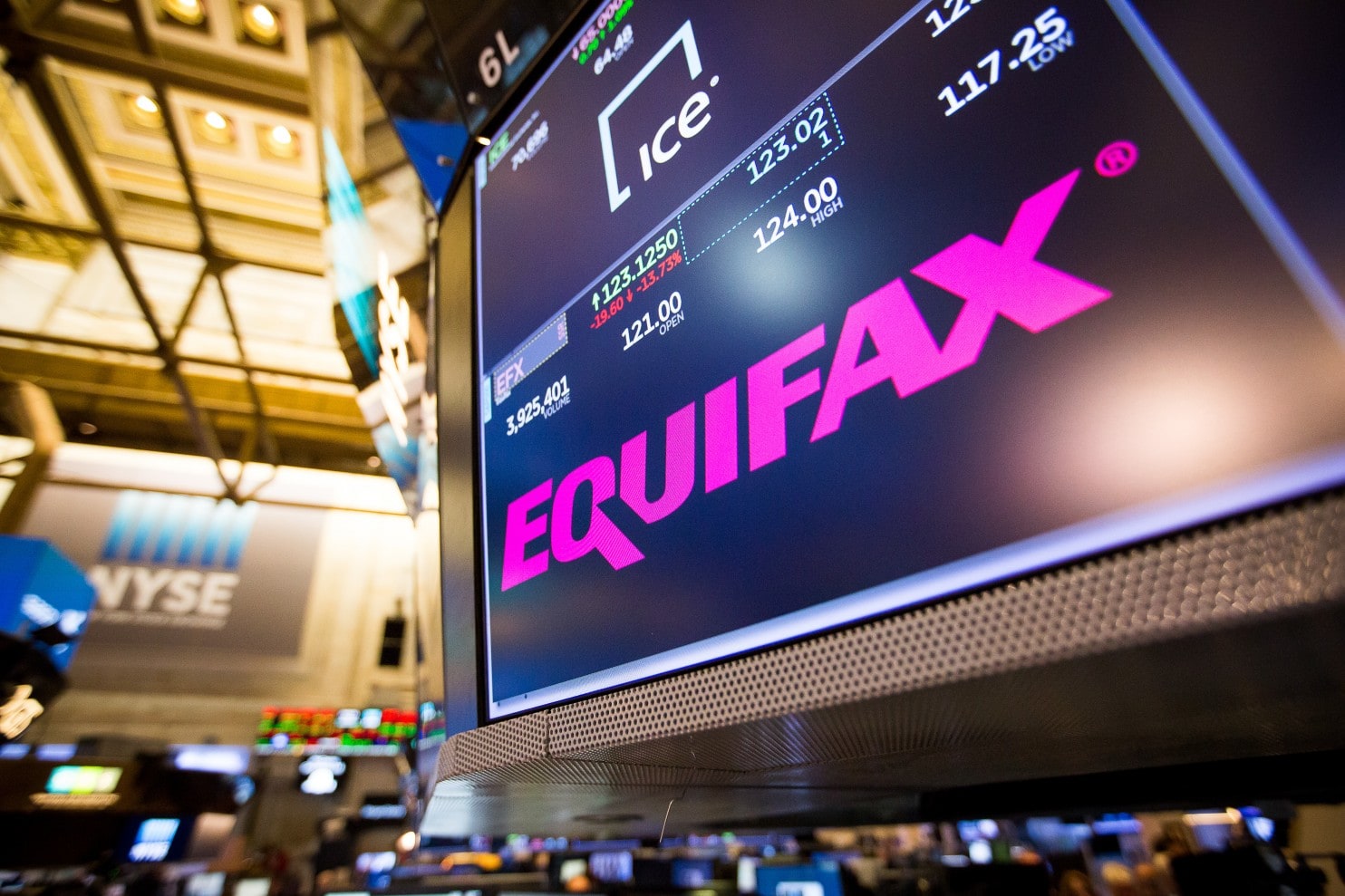
Why didn’t Equifax protect your data? Because corporations have all the power. – The Washington Post

My coworker and I were musing about the huge Equifax breach, where 143 million Americans had their personal data exposed to hackers. We wondered if Equifax would pay a price for this loss. Then we wondered who could punish Equifax.

It’s not us, we concluded. We’re not Equifax’s customers, we’re their product!

Here’s a great perspective piece in the Washington Post which discusses how lopsided the tables are towards large corporations and against the little guys like you and me.

No wonder. To be an American consumer these days is to have become numb to signing away your rights so you can buy products and services. If you want to use a smartphone, you have to agree to give your privacy to the company that makes it, and to your Internet provider, which can see every website you visit. If you want to use email, you agree that the provider can scan your messages for certain words to sell ads. And when you sign up for financial services, you give away your rights to negotiate how your money is used or how your information is protected. The people whose Social Security numbers Equifax lost had no say in how the company acquired, uses or guards their financial information.

Source: Why didn’t Equifax protect your data? Because corporations have all the power. – The Washington Post

Bay Area housing: Sunnyvale home sells $800,000 above asking

This story caught my eye, when a modest, 2,000sf home in Sunnyvale, CA sold for $800,000 over asking price. True, there is a little real estate sleight-of-hand going on here with how it was priced but there’s no denying that this is an eye-popping sale.

This kind of outrageous housing market is what comes to mind when I think of what might happen if Amazon chooses to set up its second headquarters in the Triangle. I think of the stunning metamorphosis that’s taken place this year in the neighborhood surrounding East Raleigh’s Ligon Middle School, where affordable homes have been all but demolished in favor of fancy new homes, and I wonder how long it will be before no one here but stock-option millionaires can live where they work.

Be careful what you wish for, Raleigh. More on this in an upcoming blog post.

A house in Sunnyvale just sold for close to $800,000 over its listing price.

Your eyes do not deceive you: The four-bed, two-bath house — less than 2,000 square feet — listed for $1,688,000 and sold for $2,470,000.

“I think it’s the most anything has ever gone for over asking in Sunnyvale — a record for Sunnyvale,” said Dave Clark, the Keller Williams agent who represented the sellers in the deal. “We anticipated it would go for $2 million, or over $2 million. But we had no idea it would ever go for what it went for.

”This kind of over-bidding is known to happen farther north in cities including Palo Alto, Los Altos and Mountain View. But as those places have grown far too expensive for most buyers, future homeowners have migrated south to Sunnyvale, a once modest community that now finds itself among the Bay Area’s real estate hot spots.

Source: Bay Area housing: Sunnyvale home sells $800,000 above asking

When Will Climate Change Make the Earth Too Hot For Humans?

Terrifying commentary on climate change.

It is, I promise, worse than you think. If your anxiety about global warming is dominated by fears of sea-level rise, you are barely scratching the surface of what terrors are possible, even within the lifetime of a teenager today. And yet the swelling seas — and the cities they will drown — have so dominated the picture of global warming, and so overwhelmed our capacity for climate panic, that they have occluded our perception of other threats, many much closer at hand. Rising oceans are bad, in fact very bad; but fleeing the coastline will not be enough.

Indeed, absent a significant adjustment to how billions of humans conduct their lives, parts of the Earth will likely become close to uninhabitable, and other parts horrifically inhospitable, as soon as the end of this century.

Source: When Will Climate Change Make the Earth Too Hot For Humans?

Swarm of 464 earthquakes hits Yellowstone National Park | Daily Mail Online

It’s low risk but low-risk doesn’t generate clicks. 🙂

Hundreds of earthquakes have hit Yellowstone National Park in the space of a week, according to experts.

A total of 464 quakes have been recorded over the past week at Yellowstone, which sits above one of the world’s most dangerous supervolcanoes.

This is the highest number of earthquakes at the park within a single week in the past five years.The recent activity has raised fears that the supervolcano is about to blow.

If it were to erupt, the Yellowstone supervolcano would be one thousand times as powerful as the 1980 Mount St Helens eruption, experts claim – although they say the risk is ‘low’.

Source: Swarm of 464 earthquakes hits Yellowstone National Park | Daily Mail Online

BBC – Capital – Why you should manage your energy, not your time

Interesting approach.

Many of us will have had that sense of there just not being enough hours in the day to do everything we need to do. Tasks that should take only a few minutes can stretch into hours, all while other work mounts up.

For most, the solution is to work later into the evening or even over the weekend, which leaves many of us feeling exhausted, stressed and burned out. But what if working less were the key to getting more done?

Source: BBC – Capital – Why you should manage your energy, not your time

As early as 2007, analysis demonstrated that 400-V dc distribution had advantages; Now there’s a way to implement it.


Is DC power the wave of the future for computing environments?

Power distribution in data centers used to emulate the architecture of old telephone central offices. A “rectifier” would step down and rectify the ac from the power line and use it to charge banks of batteries that provided an unregulated 48 V dc, which was distributed around the facility to run the telephone equipment in the racks.

Since at least 2007, data-center engineers have been talking about distributing 400 V dc (sometimes 380 V). Data centers are bigger and use a lot more power than telco central offices. At a minimum, higher voltage distribution would mean lower I2R losses and/or thinner power-distribution cables.

Source: As early as 2007, analysis demonstrated that 400-V dc distribution had advantages; Now there’s a way to implement it.

Cheap Thoughts: Time of Use for Water

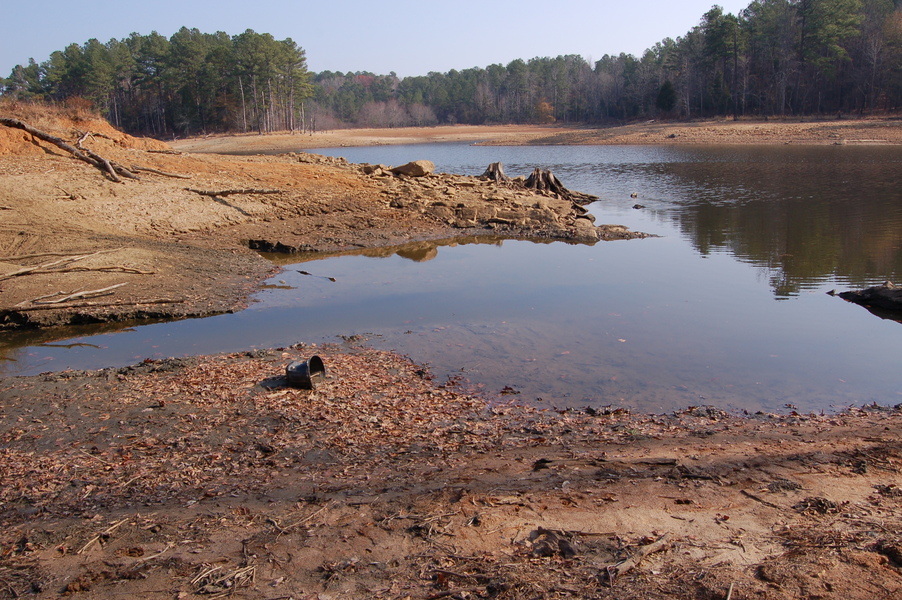
Falls Lake at the worst of drought, December 9, 2007

On Saturday my family and placed four tons of grass sod in our backyard. As I fired up a sprinkler for the first time in several years (a decade, perhaps?) I thought about how much our next water bill was going to cost us. The City of Raleigh has tiered water rates, meaning everyone gets their base allotment for the same price but the price quickly jumps beyond that amount. The idea is that economics will compel water customers to conserve which is a worthy goal.

But what about the times conservation isn’t needed? Right now Falls Lake is full. The U.S. Army Corps of Engineers is releasing water from Falls Lake at a rate of 6,000 cubic feet per second, which I’ve heard is about the most it will release at any time. This onslaught of water is causing issues downstream, flooding neighborhoods that haven’t yet recovered from last month’s initial round of heavy flooding.

It doesn’t appear that conservation is an issue at the moment, so what if our water bills could reflect this? What if Raleigh residents could give The Army Corps a hand by putting that water where it could good some good: on everyone’s lawns and gardens, not just those unfortunate few who live close to the raging river? What if the City reduced water rates on a temporarily basis while the river release was underway? I know there’s more to water use than simply supply (it has to be treated, for instance) but tying water rates to our supply might make sense.
Continue reading