
Fearing the radio

Console radio

Console radio

News and Observer reporter John Murawski wrote today of a group of electricity customers who fear that the smart meter Duke Energy uses is poisoning them with radio-frequency (RF) radiation.

Andrew McAfee of Raleigh submitted a 45-page filing, noting prominently: “Sent from a cabled computer with the WiFi turned off.”

“Your body basically becomes an antenna,” he said from his landline phone last week. “I immediately feel a tingling, burning sensation on my scalp.”

“These meters are designed to burst a radiation signal out a couple of miles,” McAfee said of smart meters. “Imagine every house in your neighborhood blipping out these things all day.”

Apparently, people don’t understand that radiation of the RF variety is not the same as radiation of the nuclear variety. One is a known carcinogen. The other brings you Fox News (whether Fox News is a carcinogen is post for another day).

Blaming RF (which I’ll call by their better-known name, radio) for something is akin to blaming sound: it all depends on what the sound or radio is. Listening to music with your ear placed on the grill of a 1000 watt audio amplifier will likely cause you injury, whereas the same music at a reasonable volume on your stereo at home can be safe and enjoyable.
Continue reading

Multitasking Is Killing Your Brain | Inc.com

Sort of like dumping a lot of articles on one’s blog, eh? 🙂

Our brains are designed to focus on one thing at a time, and bombarding them with information only slows them down.

MIT neuroscientist Earl Miller notes that our brains are “not wired to multitask well… when people think they’re multitasking, they’re actually just switching from one task to another very rapidly. And every time they do, there’s a cognitive cost.”This constant task-switching encourages bad brain habits. When we complete a tiny task (sending an email, answering a text message, posting a tweet), we are hit with a dollop of dopamine, our reward hormone. Our brains love that dopamine, and so we’re encouraged to keep switching between small mini-tasks that give us instant gratification.

This creates a dangerous feedback loop that makes us feel like we’re accomplishing a ton, when we’re really not doing much at all (or at least nothing requiring much critical thinking). In fact, some even refer to email/Twitter/Facebook-checking as a neural addiction.

Source: Multitasking Is Killing Your Brain | Inc.com

The millennial work ethic – Baltimore Sun

Some of my older friend scoffed at this column, but any mocking comes at one’s own peril, because this is how it will soon be.

The bar has been raised. If you as an employer want to attract the best and the brightest of the millennial generation, you will have to treat your employees a bit better than you once did.

Once upon a time, employment was for life. Joining a company meant you were looked after until retirement and even beyond. Then companies found that having massive layoffs and gutting these generous employee benefits appealed to Wall Street. Generations of workers became expendable to employers and learned wisely. The game had changed and job security was redefined as “how quickly one can get another job.”

Now the pendulum swings in favor of the worker, particularly the knowledege workers building our digital economy. This generation is building our new economy and the opportunities ahead of them and the awe-inspiring imagination they bring are like no other. This generation is responsible for the dizzying, accelerating pace of change in our world. They will hold you to your promises. They won’t play by the old rules. They demand a better way and they have the hustle and moxie to get it.

Laugh now if you choose, but soon you’ll be living in their world. Employers who understand this will help build this world.

Dear Previous Employer,

You may think that you have gotten the best of me, but you have not. I am a millennial. You may think that you have put me in a bad spot, but you have not. I am a millennial. You may think that you can threaten me, but I am not afraid. I am a millennial.

I didn’t write this letter on a program that I installed with a disc on my computer, I wrote it on the cloud. I didn’t grow up hungry during the Great Depression, I grew up safe and comfortable. I didn’t walk to school uphill both ways, I took a bus.

Source: The millennial work ethic – Baltimore Sun

Can changing your mealtimes make you healthier? – BBC News

Fascinating experiment on how fasting longer at night might make you healthier. The only issue is that a pool of 16 subjects does not make for a definitive, scientific result.

Many people want to eat more healthily but find it difficult to change their diet. So what happened when Michael Mosley altered not what he ate, but when he ate?

We’ve known for some time that altering the time at which you eat can affect your weight and metabolism. At least if you are a mouse.

Based on mice studies, it seems the secret to improving your health is to restrict the time window within which you eat, and by doing so extend the amount of time you go without food.

Source: Can changing your mealtimes make you healthier? – BBC News

The 19th Century plug that’s still being used – BBC News

The BEEB covers Apple’s rumored plans to kill off the phono plug. The story includes a quote from an Apple analyst:

“It feels painful because you’ve got hundreds of millions of devices out there that are using the old standard,” says Horace Dediu, a technology analyst with in-depth knowledge of Apple.

… and …

“Studying Moore’s Law and the history of technology, it’s clear we’re not going to stick around with something analogue for long,” he says. “It’s almost puzzling that it’s taken so long.”

Maybe because analog phone jack technology Just Works? Any guesses why an Apple stock analyst might like this move?

The Sum of Us petition is here, if you care to sign it.
Continue reading

Highlights of 2015: Dix Park, part II

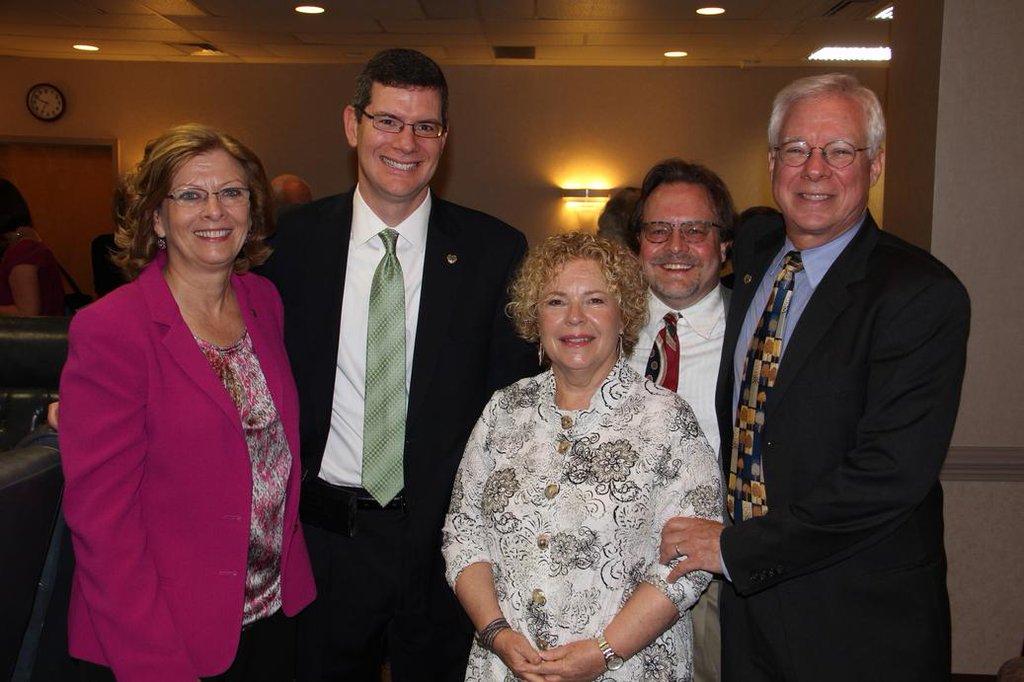
Dix Park proponents at Council of State meeting. L-R, Mayor Nancy McFarlane, City Manager Ruffin Hall, Councilor Kay Crowder, Dix Visionaries member Jay Spain, Councilor Russ Stephenson

Dix Park proponents at May 2015 Council of State meeting. L-R, Raleigh Mayor Nancy McFarlane, City Manager Ruffin Hall, City Councilor Kay Crowder, Friends of Dix Park member Jay Spain, City Councilor Russ Stephenson


2015 was the year that the City of Raleigh finally got the prize it had long sought from the state: the deed to the Dorothea Dix property. In February, the city and state worked out a deal for Raleigh to purchase the property for $53 million dollars. This is far more than the original lease terms (under the first deal that was subsequently torn up by a spiteful General Assembly) and also far more than most state property that gets transferred to local entities. Apparently, Republican leaders in the Gereral Assembly have no problem with burdening people with taxes as long as the urban folk who have to pay.

Anyway, this time the deal got negotiated and signed behind the scenes. The group on whose board I sit, Friends of Dorothea Dix Park (FDDP), was largely kept in the dark about negotiations (though I knew talks were underway). It’s all the same now that the park has been secured, though. I did get to attend the following Council of State meeting on May 5th where the rest of state leaders signed off on the deal. This is my photo of city and Dix Visionaries leaders after the historic event.
Continue reading

U.S. predicts zero job growth for electrical engineers | Computerworld

This doesn’t surprise me. Electronics has been transformed into whole computers on chips, while computers themselves have become capable of supporting nearly unlimited creativity. Today anyone can perform on a smartphone what was once considered miraculous work, without knowing anything about circuitry or how to solder. Software is the new electrical engineering.

Two occupations long associated with innovation — electrical and electronics engineering — has stopped growing, according to the U.S. government.T

he Bureau of Labor Statistics (BLS), in an update of its occupational outlook released Friday, said that the number of people employed as electrical and electronics engineers is now at 316,000, and will remain mostly unchanged for the next decade.

Source: U.S. predicts zero job growth for electrical engineers | Computerworld

Meeting the Google Fiber team

This afternoon I got a sneak peek at the new Google Fiber building in downtown Durham, thanks to a friend who works there. I got to meet the Google Fiber team as well and they’re good people.

They’re still putting the finishing touches on their Fiber Space on the first floor so I wasn’t able to see that but news reports say Google expects it to open sometime this month. Indeed, when I visited there were two construction workers outside, busily working over a noisy table saw.

The word is their new Fiber Space in Raleigh will be amazing. Google loves the building! Large skylights have been added. Also, contrary to what you may have heard, Google did not kick out 518 West from the space. The building was put up for sale and Google bought it.

Beyond that, I know little more than you do about when fiber’s going where. I do know that whatever time it arrives on my doorstep it won’t be soon enough. I can’t wait to get my Google Fiber!

Computers getting more efficient all the time

I was chatting at a party Friday night with a gentleman who sells data center construction projects. He made the point that data center power consumption accounts for 4% of overall electricity consumption. What’s more, he said that this percentage is only going to go up.

I’ve been thinking for a while now about how cloud technologies are not only affecting our computing habits but also our power consumption. When the Internet Age first dawned, the backend of websites consisted of beefy servers that did all the work of serving up websites: databases to churn out data, a layer to render it (PHP, Java, etc.), and so forth.
Continue reading

Reagan and Gorbachev Agreed to Pause the Cold War in Case of an Alien Invasion | Smart News | Smithsonian

Interesting. Did Reagan know something about aliens?

At one point during the 1985 Geneva Summit, President Ronald Reagan and Soviet Premier Mikhail Gorbachev took a break from negotiations to take a walk. Only their private interpreters were present and for years, the details of what they talked about were kept secret from both the Russian and American public. But during a 2009 interview with Charlie Rose and Reagan’s Secretary of State George Shultz, Gorbachev revealed that Reagan asked him point-blank if they could set aside their differences in case the world was invaded by aliens.

Source: Reagan and Gorbachev Agreed to Pause the Cold War in Case of an Alien Invasion | Smart News | Smithsonian

Update: You can watch Gorbachev’s comment here, beginning at the 2:53 mark.