Jumpseat: It’s All About the APU | Flying Magazine

I enjoyed this pilot’s story of how a broken APU on his aircraft caused a mess.

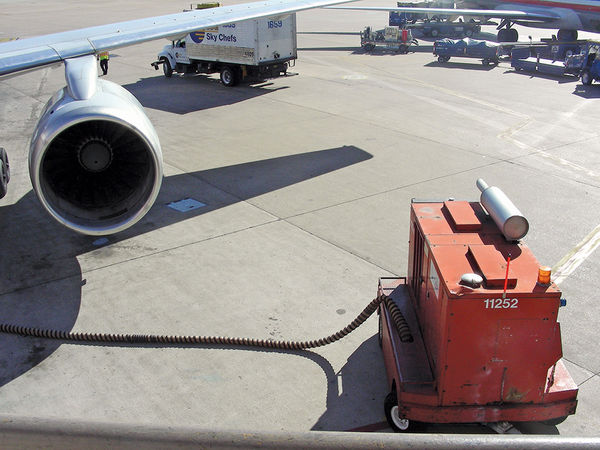
For more than 50 years of jet airliner operation, the APU has been an integral part of airplane independence. The APU is a small jet engine located within the structure of the fuselage. With today’s airliners, the unit is operable both on the ground and in flight. In flight, the APU provides both a backup source of electric power and a limited amount of air pressure at lower altitudes — usually below 20,000 feet.

On the ground, the APU is capable of being the sole source of electricity and the sole source of air pressure. Air pressure from the APU is the standard method utilized in starting the engines. When air is not available, starting becomes problematic. On this particular trip, an inoperative APU became more problematic than my copilot and I could have ever imagined.

Source: Jumpseat: It’s All About the APU | Flying Magazine

Even moderate drinking can damage the brain, claim researchers | Society | The Guardian

Drinking even moderate amounts of alcohol can damage the brain and impair cognitive function over time, researchers have claimed.

While heavy drinking has previously been linked to memory problems and dementia, previous studies have suggested low levels of drinking could help protect the brain. But the new study pushes back against the notion of such benefits.

“We knew that drinking heavily for long periods of time was bad for brain health, but we didn’t know at these levels,” said Anya Topiwala, a clinical lecturer in old age psychiatry at the University of Oxford and co-author of the research.

Source: Even moderate drinking can damage the brain, claim researchers | Society | The Guardian

50 Years Ago: NSA’s Deadliest Day | Observer

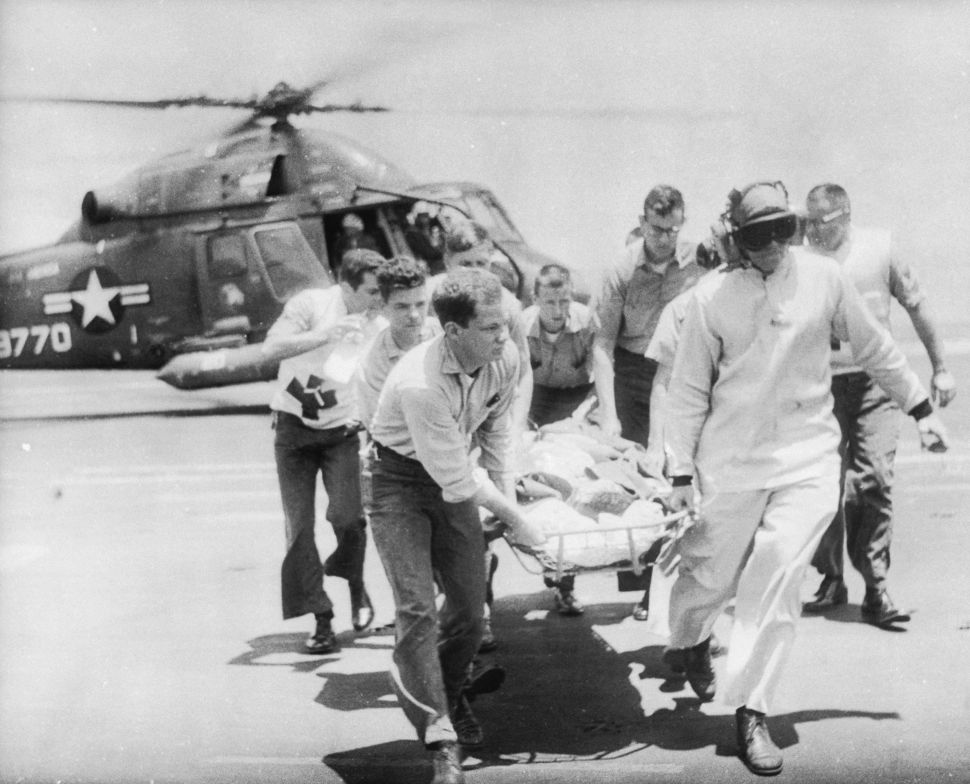
June 8, 1967 was the worst day in the history of the National Security Agency. On that date, Israeli airplanes and torpedo boats mauled and nearly sank an American spy ship in international waters, killing or maiming most of its crew. This tragedy appears as a footnote to Israelis, an unpleasant sideshow of their victorious Six Day War, while official Washington preferred the embarrassing episode be forgotten. But NSA has never let the Liberty and her ill-fated crew disappear from memory altogether.

Source: 50 Years Ago: NSA’s Deadliest Day | Observer

Ramadan 2017: 9 questions about the Muslim holy month you were too embarrassed to ask – Vox

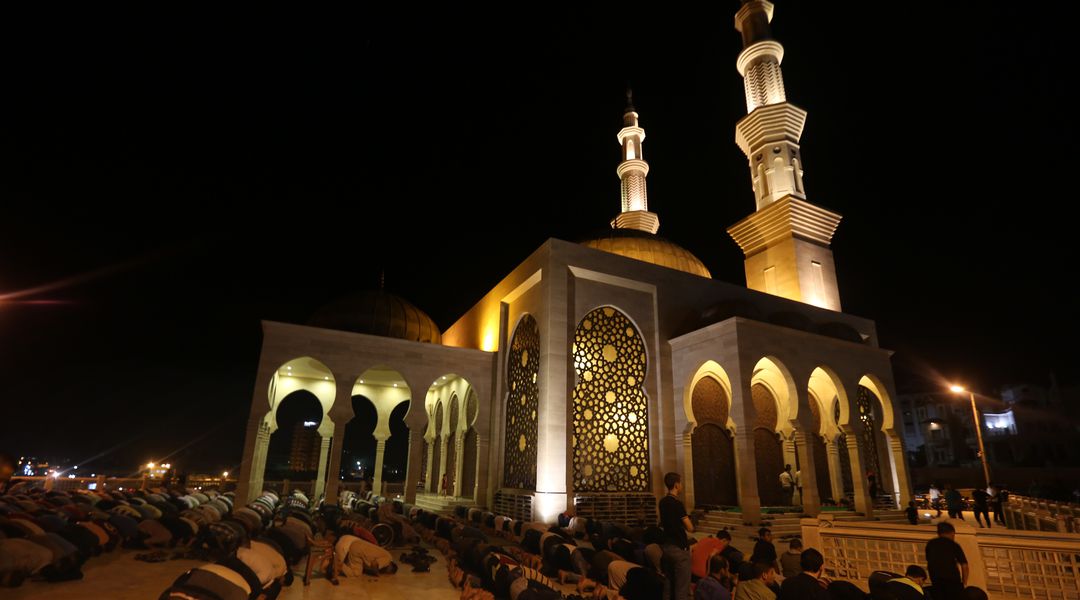
The Muslim holy month of Ramadan starts Friday evening, and most of the world’s 1.6 billion Muslims will be observing. This means there’s a good chance you might encounter someone — a friend, a co-worker, the barista making your latte at Starbucks, your child’s teacher — who is celebrating Ramadan.

But what is Ramadan, exactly? And how can I make sure I don’t accidentally offend my Muslim friends and acquaintances during Ramadan?We’ve got you covered: Here are the most basic answers to the most basic questions about Ramadan.

Source: Ramadan 2017: 9 questions about the Muslim holy month you were too embarrassed to ask – Vox

To Be a Genius, Think Like a 94-Year-Old – The New York Times

Great story on why innovation isn’t the exclusive domain of the young. The 94-year-old Dr. Goodenough continues to innovate.

In 1946, a 23-year-old Army veteran named John Goodenough headed to the University of Chicago with a dream of studying physics. When he arrived, a professor warned him that he was already too old to succeed in the field.

Recently, Dr. Goodenough recounted that story for me and then laughed uproariously. He ignored the professor’s advice and today, at 94, has just set the tech industry abuzz with his blazing creativity. He and his team at the University of Texas at Austin filed a patent application on a new kind of battery that, if it works as promised, would be so cheap, lightweight and safe that it would revolutionize electric cars and kill off petroleum-fueled vehicles. His announcement has caused a stir, in part, because Dr. Goodenough has done it before. In 1980, at age 57, he coinvented the lithium-ion battery that shrank power into a tiny package.

Source: To Be a Genius, Think Like a 94-Year-Old – The New York Times

United Passenger “Removal”: A Reporting and Management Fail | naked capitalism

This is the best piece I’ve read yet on United’s “re-accommodation” fiasco.

As disturbing as is the now widely-discussed incident of the brute force removal of a 69 year old doctor from a United flight last week, equally troubling is the poor job the press has done on such a high profile and relatively simple story. We’ll go over some of the glaring and regular errors as well as troubling oversights before turning to another puzzlingly under-examined issue: what this incident says about management at United. And we don’t mean arrogance and tone-deafness.

Reporting Failures

Widespread misreporting of the cause of the incident as “overbooking”. It would be difficult to figure out how to construct a reasonable sample, from reading a large number of accounts of the incident, a substantial majority, which I would guesstimate as being in the 75% range, refer to the cause of United’s perceived need to eject the elderly passenger, Dr. David Dao, as “overbooking”. Confirming this impression is that that four Senators and Governor Chris Christie, when weighing in on the incident, all referred to it as the result of overbooking or overselling.

Source: United Passenger “Removal”: A Reporting and Management Fail | naked capitalism

Video shows man forcibly removed from United flight from Chicago to Louisville

In case you were under a rock, yesterday United Airlines dragged a paying passenger off one of its planes to make room for another United crew to fly standby. The resulting outcry caused United’s stock to lose $800 million in value at one point Tuesday. CEO Oscar Munoz then released the biggest bullshit non-apology ever, apologizing for having to “re-accommodate” this passenger. I predict that “re-accommodate” has already earned its place on the “word of the year” lists.

A video posted on Facebook late Sunday evening shows a passenger on a United Airlines flight from Chicago to Louisville being forcibly removed from the plane before takeoff at O’Hare International Airport.

The video, posted by Audra D. Bridges at 7:30 p.m. Sunday, is taken from an aisle seat on a commercial airplane that appears to be preparing to take flight. The 31-second clip shows three men wearing radio equipment and security jackets speaking with a man identified as Elizabethtown doctor David Dao seated on the plane. After a few seconds, one of the men grabs the passenger, who screams, and drags him by his arms toward the front of the plane. The video ends before anything else is shown.

Source: Video shows man forcibly removed from United flight from Chicago to Louisville

KremlinGate Just Put the Trump White House in a Precarious Place | Observer

Last week I explained in this column how President Donald Trump, despite facing serious political challenges over his murky ties to the Kremlin, was fortunate to have opponents more motivated by partisanship than truth-telling. As long as that state of affairs continued, the commander-in-chief was likely to avoid the thorough scrutiny which his apparent links to Moscow actually merit.

A lot has changed in just a few days. Last week began promisingly for the president, with his joint address to Congress on Tuesday evening earning better reviews than many had anticipated. Then it all unraveled the next day, when it was reported that Attorney General Jeff Sessions, a key member of the White House inner circle, had two discussions with Sergei Kislyak, the Russian ambassador in Washington, during the 2016 election campaign.

It’s hardly abnormal for sitting senators—as Sessions was last year—to meet with foreign diplomats, even Russian ones, but the precise capacity in which he chatted with Kislyak suddenly became important. Was Sessions parleying with the Kremlin’s emissary as a senator or as a top advisor to Donald Trump?

Source: KremlinGate Just Put the Trump White House in a Precarious Place | Observer

HKonJ | North Carolina NAACP on crowd size at Moral March in Raleigh | News & Observer

N&O reporter Will Doran took a stab at estimating crowd size, rightfully pointing out that Fayetteville Street isn’t long enough to hold the 80,000 demonstrators some claimed were at Saturday’s HKonJ rally.

Blending the Howard Jacobs-method of estimating crowd size that Doran used with the National Park Service’s official SWAG method (“scientific wild-ass guess”), I’ve done my own calculations, based on the drone shot I took and shared in the previous blog post and measuring streets and spaces using Google Maps.

Here’s what I came up with:
South Street area between Salisbury and Wilmington, curb to curb: 600 x 33 ft = 19,800 sq. ft.
Wilmington between South and Davie: 1224 x 34 ft. = 41,616 sq. ft.
Davie between Wilmington and Fayetteville: 300 x 38 ft. = 11,400 sq. ft.
Fayetteville St. between Davie and Morgan: 1429 x 99 ft. = 141,471 sq. ft.

Now, based on my drone photo there is a huge crowd still in front of Memorial Auditorium at 10:35 AM. The area they’re in totals 71,500 sq. ft, give or take. It looks packed.

Going by the 5 sq. ft. per person Jacobs model and assuming all of these areas are that full, I get a high-end guesstimate of 57,157 people. The low-end estimate assuming the 10 sq. ft model (and that Memorial is 5-level full) is 35,729 people. A middle estimate that assumes Fayetteville was closer to slightly half-full gives me 44,168 people.

So, did the rally attract 80,000? Not even close. Still, the numbers it did attract are still quite impressive by any measure.

Supporters of Saturday’s protest march in downtown Raleigh, the 11th annual HKonJ, said more than 80,000 people attended.Organizers including the N.C. NAACP announced the massive crowd size, then it began circulating on social media and was picked up and repeated by several national news outlets covering the event.

The march was held to oppose President Donald Trump and to voice support for a laundry list of causes, ranging from supporting Planned Parenthood and the Affordable Care Act to opposing gerrymandering. HKonJ stands for Historic Thousands on Jones Street.

But many questioned whether the crowd was really as big as organizers and attendees claimed, and some asked PolitiFact North Carolina to look into it.

Crowd size estimates are a handy way of gauging people’s interest – or lack thereof – in the big topics of the day.So understandably, estimates often inspire emotional reactions from both sides – especially in highly politicized contexts like this weekend’s HKonJ.

Source: HKonJ | North Carolina NAACP on crowd size at Moral March in Raleigh | News & Observer