Time to bus a move

I’ve been looking for a way to take the bus to work and think I’ve found it! There’s a Park and Ride lot just off Blue Ridge Road where a Triangle Transit bus departs at 9:07 AM. It stops at the Factory Outlet Mall at 9:22, from where I can ride my bike over to the office and be there by 9:30. I still have to drive to Blue Ridge Road but it beats driving all the way out to RTP.

I drove over to check out the P&R lot this morning and was pleasantly surprised to see it was almost entirely full! No bike racks, though, which was a disappointment. I would love to have a place to put my bike in the event that the bus bike racks are full and I have to leave it.

I might also consider buying a used bike to leave at the outlet mall so that I don’t have to haul it on the bus every day. As with the Park and Ride lot, there are no bike racks at the outlet mall. I’m not sure why major transit stops don’t have bike racks but I’ll see if I can get an answer.

Oh, and I tweeted yesterday that I could never commute by bus until there’s a bus dedicated to singing. I guess I’ll have to keep quiet or make quick friends with my fellow commuters!

Where I’ve worked: Applebee’s


A thread on Reddit about a restaurant customer leaving two pennies and a nasty note for bad service got me thinking I needed to blog about my time working for Applebee’s. Working as a server was the hardest job I’ve ever had and likely will have.

As I traveled the world in my previous jobs I was fascinated by the different ways different cultures pay their restaurant staff. In Australia there is no tipping as restaurant workers there get paid a full salary. Do you know what restaurant workers here in America get paid? Try $2.13 an hour. Yes, you can’t even buy a gallon of gas for that, but that’s a server’s base pay. The really sad thing is that that rate hasn’t changed since I waited tables at Applebee’s twenty years ago.
Continue reading

Why Young Americans Are Driving So Much Less Than Their Parents

More about the shift away from driving.

“Unfortunately for car companies,” Jordan Weissmann noted at TheAtlantic.com a couple weeks back, “today’s teens and twenty-somethings don’t seem all that interested in buying a set of wheels. They’re not even particularly keen on driving.”

Now a major new report from Benjamin Davis and Tony Dutzik at the Frontier Group and Phineas Baxandall, at the U.S. PIRG Education Fund, documents this unprecedented trend across a wide variety of indicators.

Their two big findings about young people and driving:

The average annual number of vehicle miles traveled by young people (16 to 34-year-olds) in the U.S. decreased by 23 percent between 2001 and 2009, falling from 10,300 miles per capita to just 7,900 miles per capita in 2009.

The share of 14 to 34-year-olds without a driver’s license increased by 5 percentage points, rising from 21 percent in 2000 to 26 percent in 2010, according to the Federal Highway Administration.

via Why Young Americans Are Driving So Much Less Than Their Parents – Commute – The Atlantic Cities.

Lucid dream tracking with my Zeo

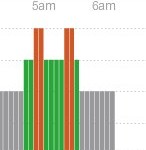
Lucid dream tracked by my Zeo


What you see above is a graph supplied by my Zeo sleep headset showing how I slept last night. The green bars indicate dream sleep while the orange bars indicate wake events. My Zeo does a fantastic job of tracking my sleep but there are moments when it gets confused. For instance, the two orange bars to the left don’t indicate when I was physically awake, they show when I was experiencing lucidity in my dream. You see, my mind was fully awake and aware in my dream. I became aware that I was dreaming while I was dreaming!
Continue reading

Is Traffic Making Us Lonely?

One nation, on the road, indivisible.

This month’s Atlantic cover story, “Is Facebook Making Us Lonely?,” has contributed to an ongoing national debate over whether Americans are more socially isolated than ever before, and whether our dependence on electronic communications is keeping us from forming meaningful social ties.

But a generation ago — long before the invention of social media — a man named Donald Appleyard was investigating how automotive traffic isolates us from one another and diminishes our human connections.

via Is Traffic Making Us Lonely? – Commute – The Atlantic Cities.

Cheap Thoughts: automating appointments

After years of constant sessions spent updating our respective calendars, Kelly and I recently began to share our calendar details directly. It’s been much easier to know who’s supposed to be where, and it all happens automatically.

Why is it that coordinating appointments is still difficult if not impossible? I subscribe to a lot of mailing lists for charities and the like, and each one has important dates that they share with me. Yet, I have to manually add the information to my electronic calendar, risking typos and errors in the process.

Why hasn’t this been automated by now? An appointment has a set number of common fields, like date, time, description, participants, etc. It should be easy to standardize, yet everyone still does things the hard way. Why?

The iCalendar format was invented to solve this problem and most mail clients now support it. Still, it’s rare that I get an iCalendar invitation in my email: usually an event is described only in plain text. Why is this?

Facebook’s events are convenient for announcing events but this is only available to Facebook users. If someone came up with a easy-to-use calendaring server that put event details into an iCalendar format reached through a shortcut link, I think it would be heavily popular.

Ting – a different mobile phone provider


Frustrated by the glacial pace of Virgin Mobile to add newer phones to it’s prepaid service, a friend alerted me to a new phone provider called Ting. Ting was started by Tucows, the first company to bring competitive pricing to domain registrations, so I have high hopes Ting can shake up the telecom world.

Ting offers pay-for-what-you-use pricing plans. If you don’t use the minutes or data you signed up for, Ting credits your account. You have very finite control over how your plan looks as well, choosing very specific amounts of minutes, texts, and data you think you’ll use.

Ting also offers tethering with its phones, allowing you to share your phone’s Internet service with up to 5 computers. Ting also supports power users and seems open to allowing its subscribers to extend their phones’ functionality.

Overall, Ting looks to be setting itself up to make some waves in the mobile phone provider market. I hope to purchase one of Ting’s phones soon and give their service a test drive.

RTP seeks to be more inviting for smaller companies

RTP seemed like a great idea 60 years ago but the tide has turned against the idea of putting job centers in the boonies. The younger workers (you know, the ones graduating from the schools that put the triangle in “Research Triangle Park”) don’t want to own cars. They want to work where they live. They want to work in a dynamic environment, not one with “large amounts of green space.” Collaboration with others spurs new ideas, not navel-gazing in green pastures (or former pastures, as is the case with RTP).

Skyrocketing gas prices and different priorities among today’s younger workforce are what dooms RTP. Yes, RTP could survive if it can become a place where one can not just work but also live and play, but it’s an uphill battle that RTP cannot win. Durham and Raleigh are light years ahead of RTP in this regard and that’s where the job growth will go.

Two years ago, concerned about competition from other research parks within the state and around the globe, RTP hired a New York urban design firm to update its master plan for the first time since the park was formed in 1959.

Since then, the urgency has also heightened as new competitors – Durham’s American Tobacco Campus and N.C. State University’s Centennial Campus, to name two – have attracted numerous start-ups.

The park, meanwhile, has been hurt by appearing to be content to be a suburban, isolated campus environment, said Joel Marcus, CEO of Alexandria Real Estate Equities, a California company that has been in the park since 1998 and today owns nearly a million square feet of lab space in RTP.

“That’s really not today’s world,” he said.

via RTP seeks to be more inviting for smaller companies, quick innovation – Economy – NewsObserver.com.

Beach trip

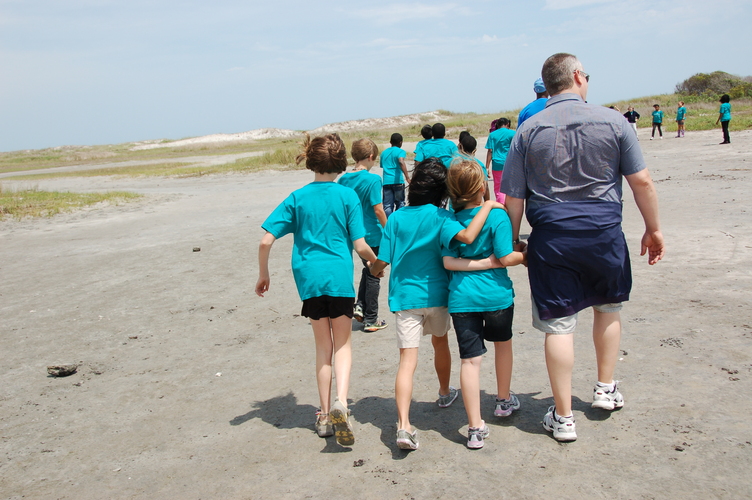
I had the pleasure Thursday of chaperoning Hallie and her 4th grade classmates on a trip to Carolina Beach, NC. I had been looking forward to it for weeks and it lived up to its promise.

We woke up at 5:20 Thursday and made it to the school at 6, where kids sat and chatted in the cafeteria while waiting for stragglers. At 6:30 the bus headed down the highway, and I followed it with three other dads in the minivan.
Continue reading