How the Russians pretended to be Texans — and Texans believed them – The Washington Post

With each new story of the Russians creating fake online support for Trump I suspect more and more that it was Russian actors behind the fake Mitt Romney Facebook likes of the last election.

In early 2016, while researching some of the most popular U.S. secession groups online, I stumbled across one of the Russian-controlled Facebook accounts that were then pulling in Americans by the thousands.

At the time, I was writing on Russia’s relationship with American secessionists from Texas, Hawaii and Puerto Rico. These were people who had hitched flights to Moscow to swap tactics, to offer advice and to find support. They had found succor in the shadow of the Kremlin.That was how I eventually found my way to the “Heart of Texas” Facebook page (and its @itstimetosecede Twitter feed as well). Heart of Texas soon grew into the most popular Texas secession page on Facebook — one that, at one point in 2016, boasted more followers than the official Texas Democrat and Republican Facebook pages combined. By the time Facebook took the page down recently, it had a quarter of a million followers.

The page started slowly — just a few posts per week. Unlike other secession sites I’d come across, this one never carried any contact information, never identified any of the individuals behind the curtain. Even as it grew, there was nothing to locate it in Texas — or anywhere else, for that matter. It was hard to escape the suspicion that there might be Russian involvement here as well.

Source: How the Russians pretended to be Texans — and Texans believed them – The Washington Post
How We Found Tom Price’s Private Jets – POLITICO Magazine

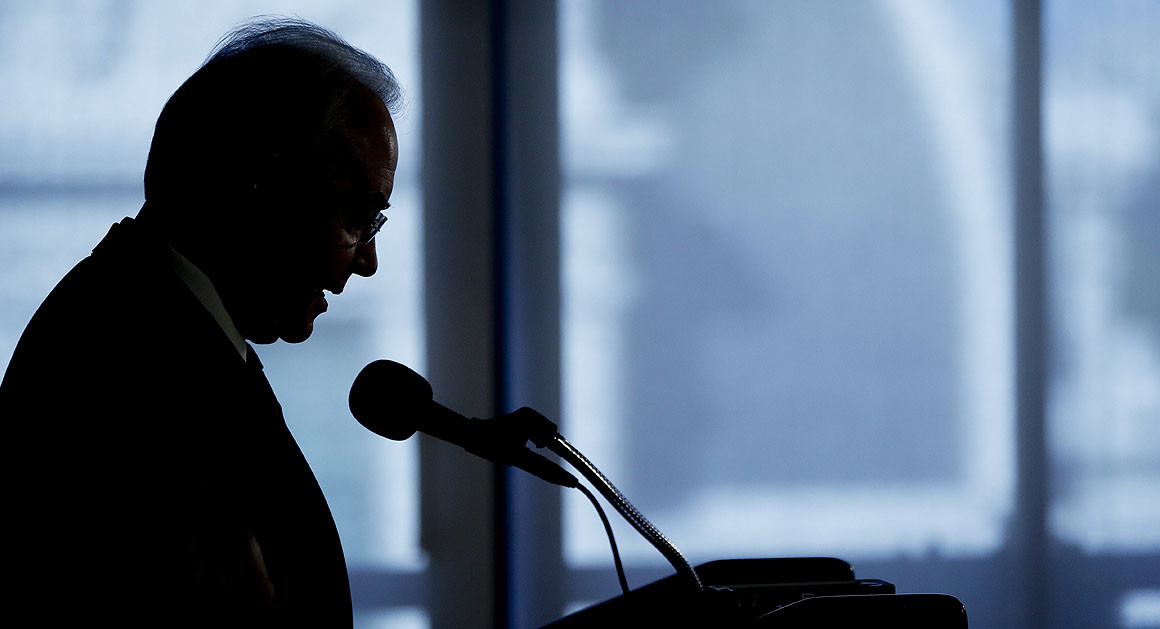
A great story on how two dogged reporters uncovered former HHS Secretary Tom Price’s overindulgence of private jet travel.

Pablo Martinez Monsivais/APPRIMARY SOURCEHow We Found Tom Price’s Private JetsA tantalizing tip, followed by months of painstaking reporting, revealed the HHS secretary’s extravagant travel habits.

The first tip came from a casual conversation with a source back in May: Health and Human Services Secretary Tom Price was using private jets for routine travel, possibly in violation of federal travel rules that allowed such flights only when commercial options weren’t available.

But it was a tip and little else—no times, no names of charter services and not even a schedule from a notoriously secretive Cabinet secretary.

So we embarked on a months-long effort to win the trust of sources, both in and outside of HHS, who were in a position to know about the secretary’s travel. This required numerous meetings and phone calls, sometimes after hours, seeking to confirm what the original source acknowledged was just secondhand information. Neither of us had ever reported a story of this difficulty before.

Source: How We Found Tom Price’s Private Jets – POLITICO Magazine

Sonic attacks on diplomats in Cuba: lots of questions, few answers | Miami Herald

The dark arts of intelligence and diplomacy are often compared to a chess match. But a former U.S. diplomat this week turned to a less sophisticated, but perhaps more apt, pastime as a metaphor for the weird, murky confrontation going on between the United States and Cuba.

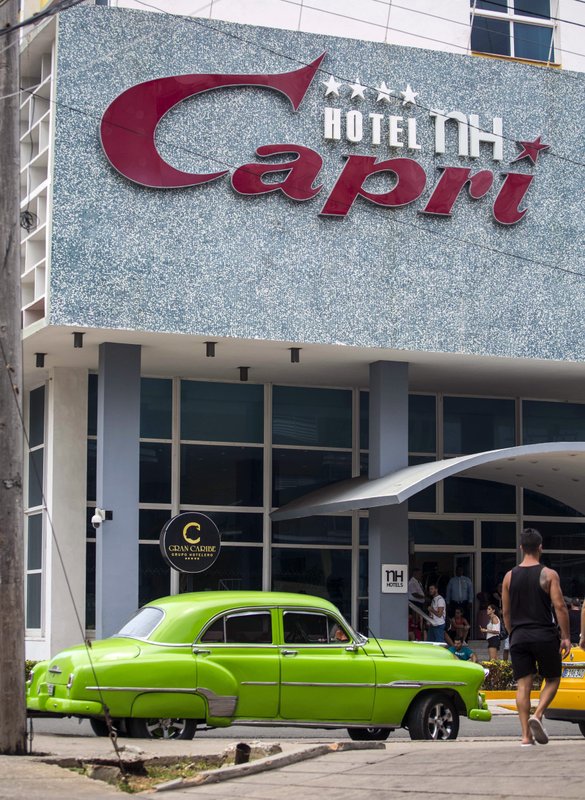
“Remember that old board game Clue?” mused a former U.S. diplomat earlier this week. “You had to solve a murder by identifying the killer, the weapon and the venue: It was Colonel Mustard, with a knife, in the ballroom.“Well, we’ve got a victim — U.S.-Cuban relations — and a venue, various houses and hotel rooms in Havana. But we haven’t got a suspect or a weapon yet. Not to make a pun, but we don’t have a clue.”

The expulsion of 15 Cuban diplomats from Washington announced on Tuesday, following a State Department decision to pull most personnel out of the American embassy in Havana, leaves diplomatic relations between the countries at half-staff.

Source: Sonic attacks on diplomats in Cuba: lots of questions, few answers | Miami Herald

State Department pulls out diplomats, families in wake of Cuba sonic attacks – CNNPolitics

So … who would most benefit from a breakdown in US-Cuba relations? Anyone know? Anyone?

If you said Vladimir Putin, you might be on your way to solving this mystery!

In November, following the US presidential election, American diplomats began to experience a series of strange incidents. As CNN first reported in August, diplomats were awoken late at night in their homes feeling unwell and hearing sounds that resembled insects or metal dragging across the floor.

They were unable to determine the source of the sound, but when they left the room or area they were in the incidents stopped immediately, two US government officials said.

By February, the State Department had concluded their diplomats were the targets of a campaign of harassment and they needed to raise the issue with Cuban officials.

The devices used in the incidents have never been found, two US officials said, but appeared to be a type of sonic weapon that emitted sound waves capable of inflicting physical harm.

But the physical symptoms that people exhibited varied greatly, preventing doctors consulted in the United States from reaching a conclusion about what caused the trauma, two US officials said.

US government technical experts were also baffled. Some affected diplomats had lines of sight to the street in their homes, while others had shrubbery and walls that blocked views of their homes. Some heard loud sounds when the incidents took place, while others heard nothing.

Source: State Department pulls out diplomats, families in wake of Cuba sonic attacks – CNNPolitics

Why didn’t Equifax protect your data? Because corporations have all the power. – The Washington Post

My coworker and I were musing about the huge Equifax breach, where 143 million Americans had their personal data exposed to hackers. We wondered if Equifax would pay a price for this loss. Then we wondered who could punish Equifax.

It’s not us, we concluded. We’re not Equifax’s customers, we’re their product!

Here’s a great perspective piece in the Washington Post which discusses how lopsided the tables are towards large corporations and against the little guys like you and me.

No wonder. To be an American consumer these days is to have become numb to signing away your rights so you can buy products and services. If you want to use a smartphone, you have to agree to give your privacy to the company that makes it, and to your Internet provider, which can see every website you visit. If you want to use email, you agree that the provider can scan your messages for certain words to sell ads. And when you sign up for financial services, you give away your rights to negotiate how your money is used or how your information is protected. The people whose Social Security numbers Equifax lost had no say in how the company acquired, uses or guards their financial information.

Source: Why didn’t Equifax protect your data? Because corporations have all the power. – The Washington Post

Experian Site Can Give Anyone Your Credit Freeze PIN — Krebs on Security

What good does it do to lock down your credit with a credit freeze if Experian will hand over your PIN to anyone who asks?

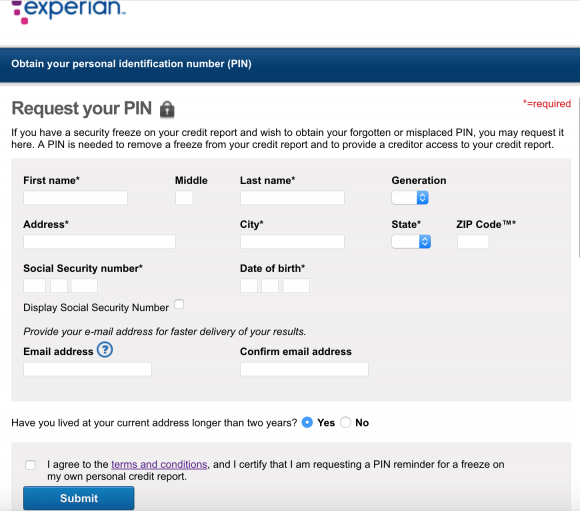
An alert reader recently pointed my attention to a free online service offered by big-three credit bureau Experian that allows anyone to request the personal identification number (PIN) needed to unlock a consumer credit file that was previously frozen at Experian.

The first hurdle for instantly revealing anyone’s freeze PIN is to provide the person’s name, address, date of birth and Social Security number (all data that has been jeopardized in breaches 100 times over — including in the recent Equifax breach — and that is broadly for sale in the cybercrime underground).

After that, one just needs to input an email address to receive the PIN and swear that the information is true and belongs to the submitter. I’m certain this warning would deter all but the bravest of identity thieves!

Source: Experian Site Can Give Anyone Your Credit Freeze PIN — Krebs on Security

Weaponizing sound: Could sonic devices have injured diplomats in Cuba?

Another story of the mystery Cuban sonic weapon. This story focuses more on the auditory effects but neglects the apparent concussions that also seems to be a symptom.

A mysterious illness has been striking people associated with the US Embassy in Cuba — and a secret sonic weapon is rumored to be the source. Over the past year, diplomats in Cuba have experienced an unusual collection of symptoms that range from hearing loss, vertigo, and nausea to concussions, CBS News reported.Yesterday, the mystery grew even more complex when the Associated Press reported that the number of US victims has climbed to 21 people. Canadian diplomatic households were affected as well, the AP says. The Cuban government has denied involvement, and no “piece of equipment” that might be causing the symptoms has been discovered yet, State Department spokesperson Heather Nauert told reporters.

Source: Weaponizing sound: Could sonic devices have injured diplomats in Cuba?

Facebook handed Russia-linked ads over to Mueller under search warrant – Sep. 15, 2017

Remember the 2012 election when I was tracking all the fake Facebook likes for Mitt Romney? Could this have also been an effort by Russia to influence the American Election by manipulating Facebook?

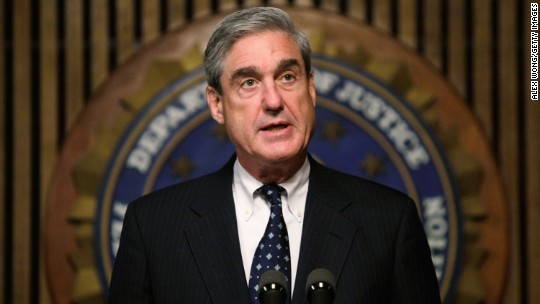
Special counsel Robert Mueller and his team are now in possession of Russian-linked ads run on Facebook during the presidential election, after they obtained a search warrant for the information.

Facebook gave Mueller and his team copies of ads and related information it discovered on its site linked to a Russian troll farm, as well as detailed information about the accounts that bought the ads and the way the ads were targeted at American Facebook users, a source with knowledge of the matter told CNN.

The disclosure, first reported by the Wall Street Journal, may give Mueller’s office a fuller picture of who was behind the ad buys and how the ads may have influenced voter sentiment during the 2016 election.

Source: Facebook handed Russia-linked ads over to Mueller under search warrant – Sep. 15, 2017

Cuba mystery grows: New details on what befell US diplomats

Quite a mystery.

WASHINGTON (AP) — The blaring, grinding noise jolted the American diplomat from his bed in a Havana hotel. He moved just a few feet, and there was silence. He climbed back into bed. Inexplicably, the agonizing sound hit him again. It was as if he’d walked through some invisible wall cutting straight through his room.

Soon came the hearing loss, and the speech problems, symptoms both similar and altogether different from others among at least 21 U.S. victims in an astonishing international mystery still unfolding in Cuba. The top U.S. diplomat has called them “health attacks.” New details learned by The Associated Press indicate at least some of the incidents were confined to specific rooms or even parts of rooms with laser-like specificity, baffling U.S. officials who say the facts and the physics don’t add up.

“None of this has a reasonable explanation,” said Fulton Armstrong, a former CIA official who served in Havana long before America re-opened an embassy there. “It’s just mystery after mystery after mystery.”

Source: Cuba mystery grows: New details on what befell US diplomats

Hacking. Still relevant after 164 years.

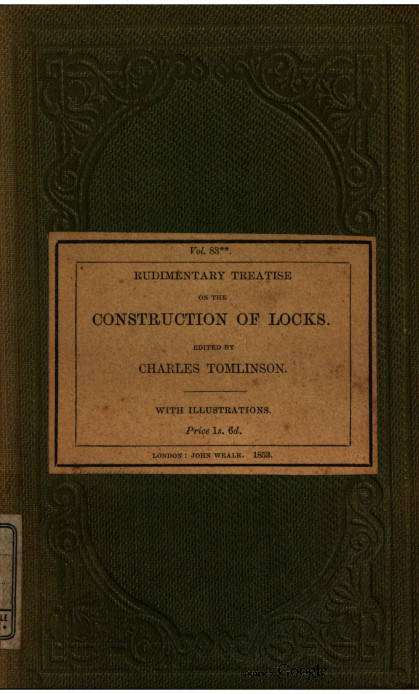
Rudimentary Treatise on the Construction of Door Locks for Commercial and Domestic Purposes


A book from 1853 seems like an unlikely place to find wisdom about the need for hacking culture, yet these words are still true today. An excerpt from “Rudimentary Treatise on the Construction of Locks” by Charles Tomlinson:

A commercial, and in some respects a social, doubt has been started within the last year or two, whether or not it is right to discuss so openly the security or insecurity of locks. Many well-meaning persons suppose that the discussion respecting the means for baffling the supposed safety of locks offers a premium for dishonesty, by showing others how to be dishonest. This is a fallacy. Rogues are very keen in their profession, and already know much more than we can teach them respecting their several kinds of roguery. Rogues knew a good deal about lockpicking long before locksmiths discussed it among themselves, as they have lately done. If a lock — let it have been made in whatever country, or by whatever maker — is not so inviolable as it has hitherto been deemed to be, surely it is in the interest of honest persons to know this fact, because the dishonest are tolerably certain to be the first to apply the knowledge practically; and the spread of knowledge is necessary to give fair play to those who might suffer by ignorance. It cannot be too earnestly urged, that an acquintance with real facts will, in the end, be better for all parties.
Continue reading