Google collects Android users’ locations even when location services are disabled — Quartz

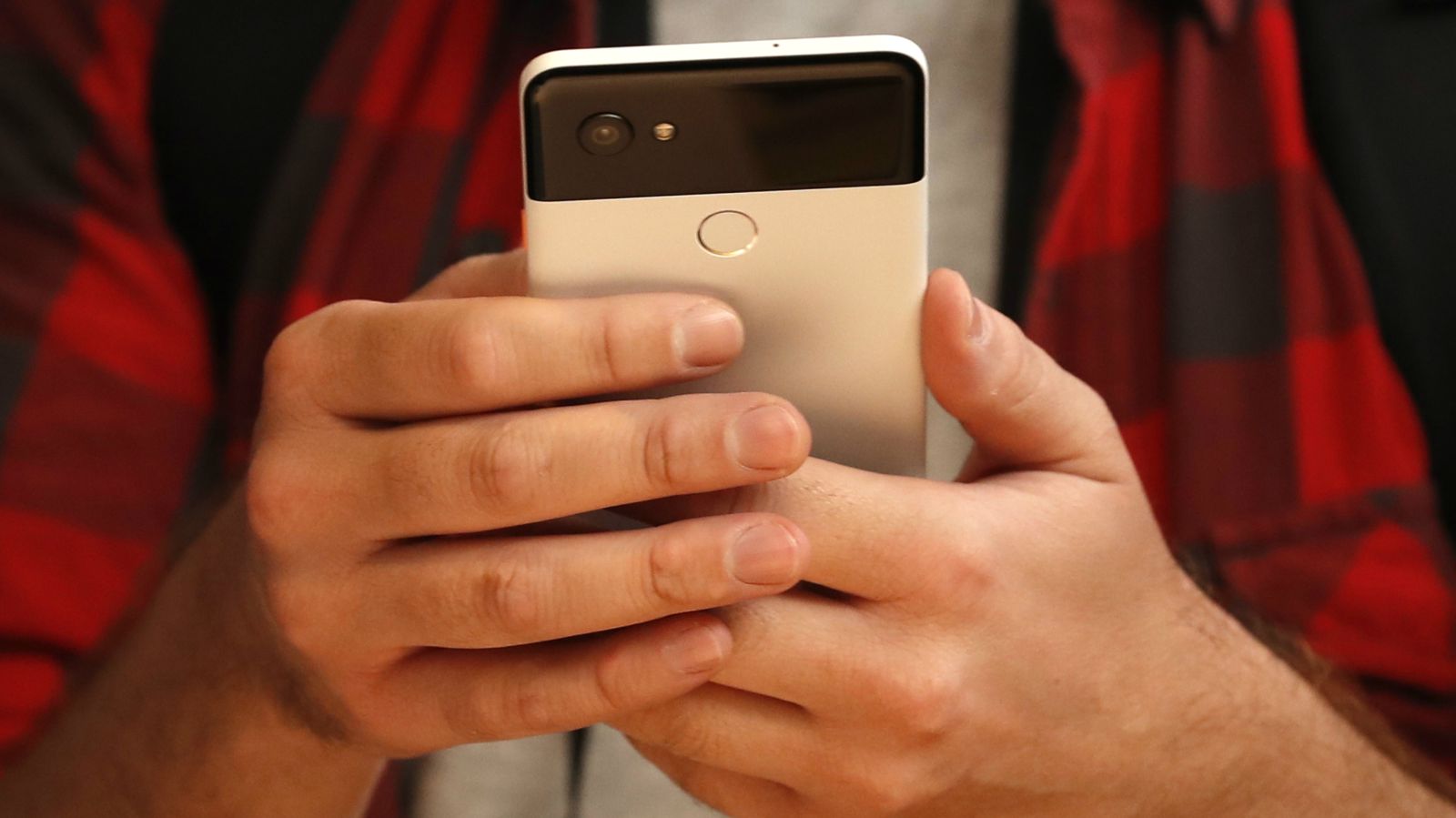
Many people realize that smartphones track their locations. But what if you actively turn off location services, haven’t used any apps, and haven’t even inserted a carrier SIM card?

Even if you take all of those precautions, phones running Android software gather data about your location and send it back to Google when they’re connected to the internet, a Quartz investigation has revealed.

Since the beginning of 2017, Android phones have been collecting the addresses of nearby cellular towers—even when location services are disabled—and sending that data back to Google. The result is that Google, the unit of Alphabet behind Android, has access to data about individuals’ locations and their movements that go far beyond a reasonable consumer expectation of privacy.

Source: Google collects Android users’ locations even when location services are disabled — Quartz

Facebook’s ‘People You May Know’ feature can be really creepy. How does it work? – Recode

When Facebook’s Android app apparently accessed my camera without my permission I banned it from my phone. This story might drive me from Facebook altogether.

This upcoming year will see me drastically curtail my Facebook usage. There are so many other things I can be doing than scrolling through cat photos, and also I am not convinced the information I share is always going to be used to my benefit.

Facebook has a pretty clear and straightforward company mission: Connect everybody in the world.

One of the ways it carries out that mission is by recommending new friends for you every time you open the app or website — essentially, the company identifies other people on Facebook that it thinks you already know, and nudges you to connect with them inside Facebook’s walls.

The problem with this feature is that it can be really creepy.

Facebook previously employed user locations to recommend friends, but says it has stopped doing that; Fusion recently wrote about a psychiatrist who claims her mental health patients were being prompted to connect with one another on the service. Not good.

When my colleague Jason Del Rey and I recently experienced a number of oddly timed recommendations, we started to get curious ourselves. How does Facebook generate these eerily coincidental recommendations?

Source: Facebook’s ‘People You May Know’ feature can be really creepy. How does it work? – Recode

How Facebook Figures Out Everyone You’ve Ever Met

In real life, in the natural course of conversation, it is not uncommon to talk about a person you may know. You meet someone and say, “I’m from Sarasota,” and they say, “Oh, I have a grandparent in Sarasota,” and they tell you where they live and their name, and you may or may not recognize them.

You might assume Facebook’s friend recommendations would work the same way: You tell the social network who you are, and it tells you who you might know in the online world. But Facebook’s machinery operates on a scale far beyond normal human interactions. And the results of its People You May Know algorithm are anything but obvious. In the months I’ve been writing about PYMK, as Facebook calls it, I’ve heard more than a hundred bewildering anecdotes:

  • A man who years ago donated sperm to a couple, secretly, so they could have a child—only to have Facebook recommend the child as a person he should know. He still knows the couple but is not friends with them on Facebook.
  • A social worker whose client called her by her nickname on their second visit, because she’d shown up in his People You May Know, despite their not having exchanged contact information.
  • A woman whose father left her family when she was six years old—and saw his then-mistress suggested to her as a Facebook friend 40 years later.
  • An attorney who wrote: “I deleted Facebook after it recommended as PYMK a man who was defense counsel on one of my cases. We had only communicated through my work email, which is not connected to my Facebook, which convinced me Facebook was scanning my work email.”

Connections like these seem inexplicable if you assume Facebook only knows what you’ve told it about yourself. They’re less mysterious if you know about the other file Facebook keeps on you—one that you can’t see or control.

Source: How Facebook Figures Out Everyone You’ve Ever Met

Paradise Papers: Tax haven secrets of ultra-rich exposed – BBC News

A huge new leak of financial documents has revealed how the powerful and ultra-wealthy, including the Queen’s private estate, secretly invest vast amounts of cash in offshore tax havens.

Donald Trump’s commerce secretary is shown to have a stake in a firm dealing with Russians sanctioned by the US.The leak, dubbed the Paradise Papers, contains 13.4m documents, mostly from one leading firm in offshore finance.BBC Panorama is part of nearly 100 media groups investigating the papers.

As with last year’s Panama Papers leak, the documents were obtained by the German newspaper Süddeutsche Zeitung, which called in the International Consortium of Investigative Journalists (ICIJ) to oversee the investigation. The Guardian is also among the organisations investigating the documents.

Sunday’s revelations form only a small part of a week of disclosures that will expose the tax and financial affairs of some of the hundreds of people and companies named in the data, some with strong UK connections.

Many of the stories focus on how politicians, multinationals, celebrities and high-net-worth individuals use complex structures of trusts, foundations and shell companies to protect their cash from tax officials or hide their dealings behind a veil of secrecy.

Source: Paradise Papers: Tax haven secrets of ultra-rich exposed – BBC News

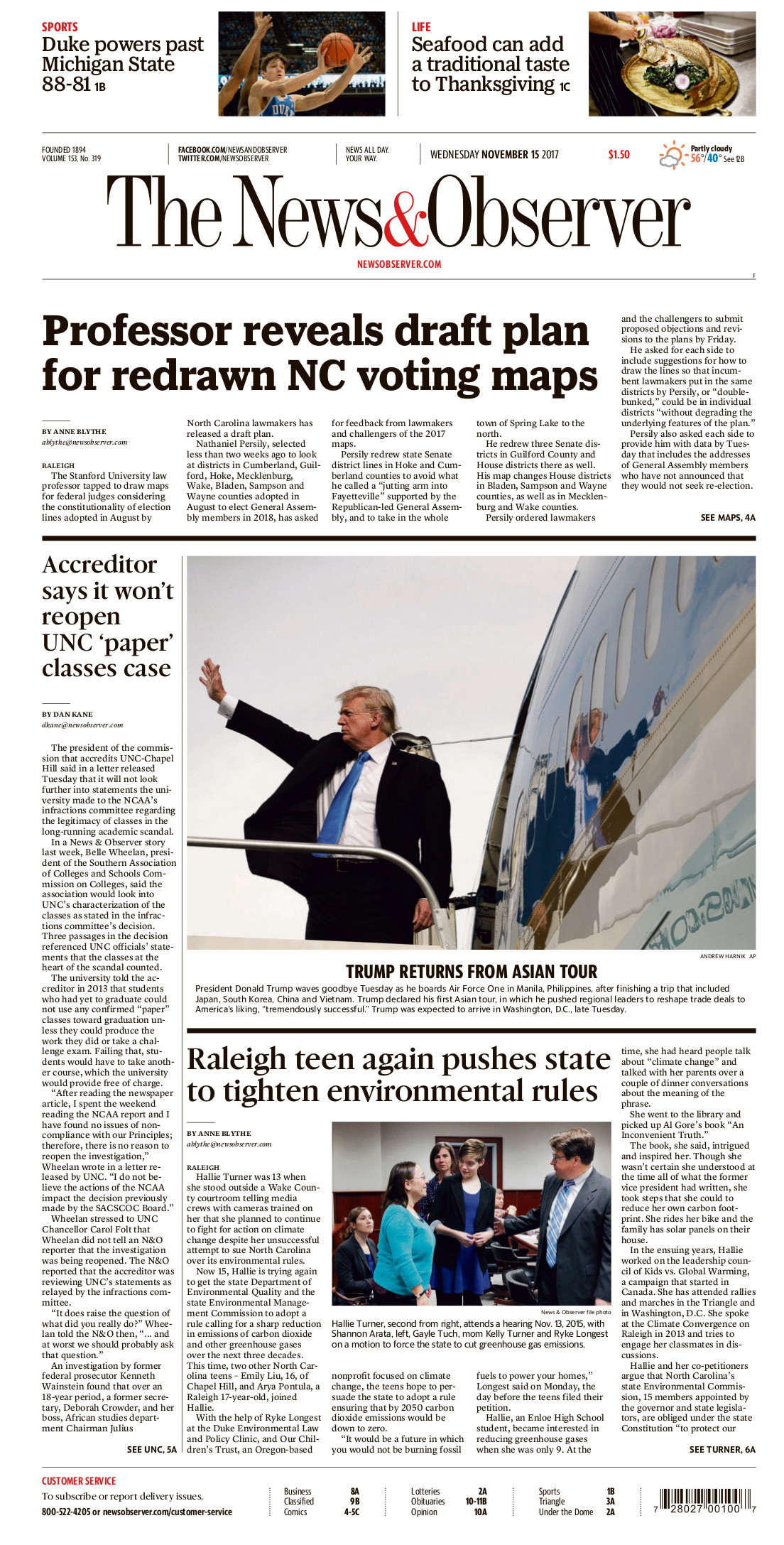
Hallie’s story runs on the front page of the N&O

Hallie was featured on the front page of the N&O, 15 Nov 2017


The story of the new environmental lawsuit that Hallie is participating in (along with two other teens) ran on the front page of the News and Observer today. Pretty cool to see that.

This is at least the second time she’s been featured on the N&O’s front page, if not the third. The first time was when she was still a guest of the WakeMed NICU.

How People Like Paul Manafort Have Multiple U.S. Passports | Travel + Leisure

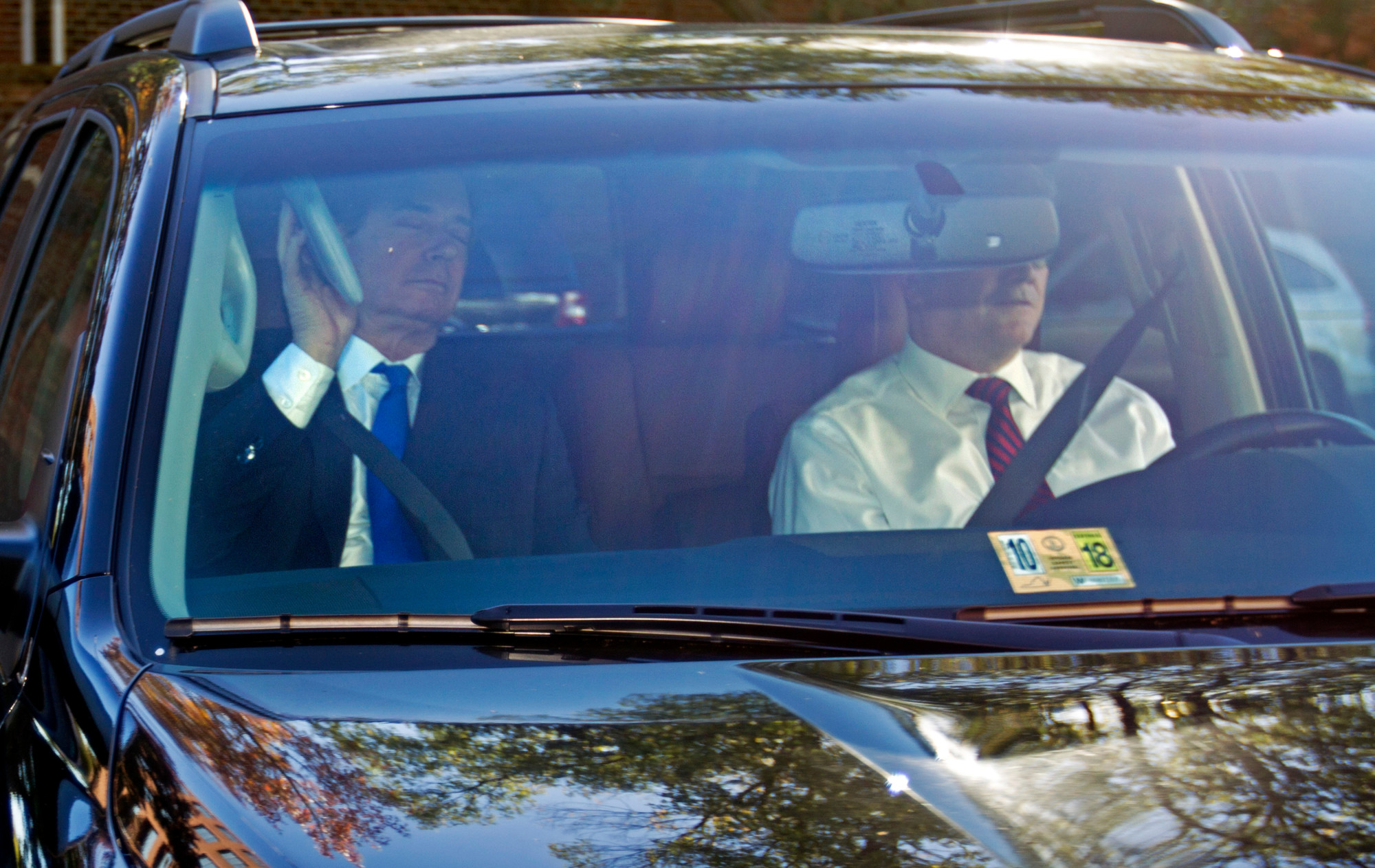
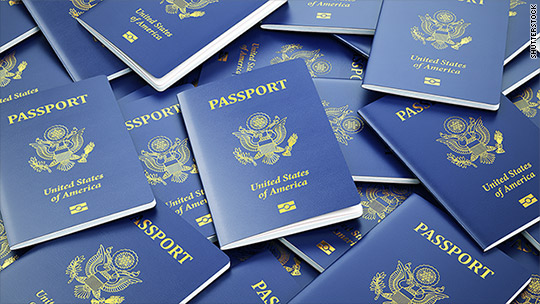
On Monday, one-time Donald Trump campaign chairman Paul Manafort was arrested and charged with a plethora of offenses including conspiracy against the United States. But that isn’t even the craziest part of the story, as according to court filings Manafort not only possesses three separate U.S. passports, but he has also filed for 10 passport applications in as many years.

This move may be the nail in the coffin for Manafort’s ability to be released on bail as it shows he’s likely a significant flight risk, but is it even illegal to own more than one passport?According to the National Passport Information Center, it’s actually perfectly legal for a U.S. citizen to own and obtain two U.S. passports — within certain guidelines. 

An official from the State Department told CNN that “no person shall bear or be in possession of more than one valid or potentially valid passport of the same type (regular, official, diplomatic, no-fee regular, or passport card) at any time, unless authorized by the Department of State.

So when would someone qualify for, or need, a second U.S. passport?

Source: How People Like Paul Manafort Have Multiple U.S. Passports | Travel + Leisure

The curious case of Paul Manafort’s three passports – ThinkProgress

A court filing on Tuesday showed that former Trump campaign chairman Paul Manafort and his associate Rick Gates were not only well-traveled and considerably wealthy, the former also had three U.S. passports to his name.

“In a little more than the last ten years, Manafort has submitted ten United States Passport applications on ten different occasions, indicative of his travel schedule,” a footnote in the court filing indicated. “He currently has three United States passports, with different numbers.”

Both Manafort and Gates were “frequent international travelers” according to the filing, and within the last year alone, Manafort had traveled to Dubai, Cancun, Panama City, Havana, Shanghai, Madrid, Tokyo, Grand Cayman Island, and Cyprus, where many of his foreign bank accounts and shell companies were based. In May and June this year, he also traveled to Mexico, China, and Ecuador while using a phone and email account he had registered under a fake name back in March.

Source: The curious case of Paul Manafort’s three passports – ThinkProgress

How many U.S. passports can you really own? – Nov. 1, 2017

Eyebrows were raised after a court filing Tuesday revealed former Trump campaign chairman Paul Manafort, now under federal indictment, has three U.S. passports.

On top of that, he had filed for 10 passport applications in as many years, according to special counsel Robert Mueller, who is investigating Russia’s alleged meddling during the 2016 presidential election.

Three passports? We wanted to find some answers.

Can you have more than one passport?Yes. U.S. citizens are allowed to have more than one valid U.S. passport at the same time, according to the National Passport Information Center, which is a division of the U.S. State Department.

But in most cases, you are only allowed to have two valid passports at a time, according to the NPIC.

As NPIC notes on its website, holding a second passport “is the exception to the rule.”

It remains unclear why Manafort has three.

Source: How many U.S. passports can you really own? – Nov. 1, 2017

Women rescued by Navy defend their account of ordeal at sea

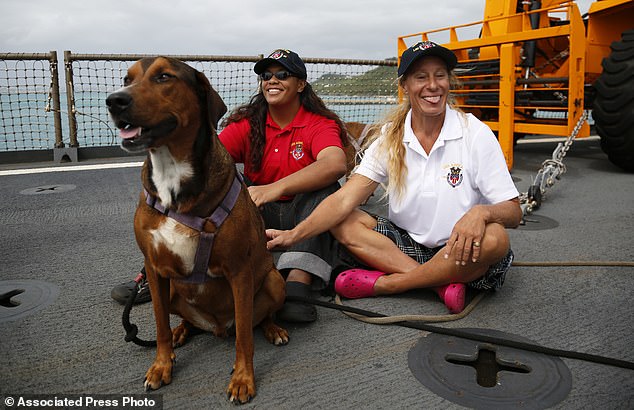
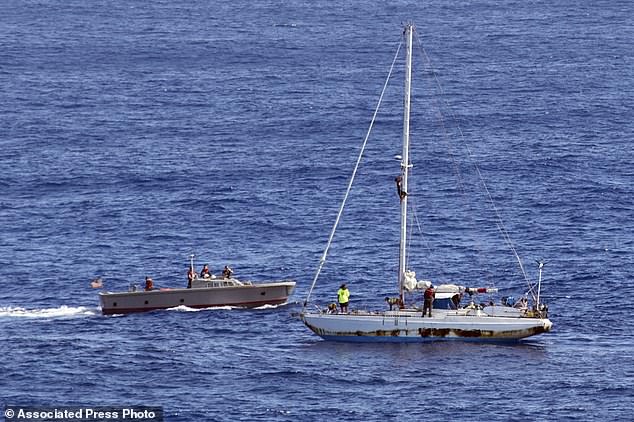
HONOLULU (AP) — Two women from Hawaii who were rescued after being lost at sea defended their account of the ordeal Tuesday, insisting that a storm was whipping up 30-foot waves and near hurricane-force winds on the night they set sail, despite records that show no severe weather in the area.

The Coast Guard is reviewing records from the days after Jennifer Appel and Tasha Fuiava put to sea in a 50-foot sailboat, but NASA satellite images for the days around their departure show no organized storms in the region where they planned to travel.

There was a tropical cyclone, but it was near Fiji, thousands of miles west of Hawaii. Localized squalls are known to pop up, but a storm lasting three days would have been visible on satellite and would have elicited mass warnings to the public to brace for the weather.

“We got into a Force 11 storm, and it lasted for two nights and three days,” Appel said.Coast Guard officials told The Associated Press on Monday that the two women had an emergency beacon but never turned it on because they did not fear for their lives. If they had, rescue would have been headed their way in a matter of minutes.

The woman “stated they never felt like they were truly in distress, like in a 24-hour period they were going to die,” Coast Guard spokeswoman Petty Officer 2nd Class Tara Molle said Monday.

The women said Tuesday that they did not use the beacon because they never felt they were in immediate danger, yet they have been quoted as saying they did not think they would survive another day, and that they were fearful during a dramatic tiger shark attack that lasted for six hours. Furthermore, the pair said they had been flagging vessels and sending distress signals for at least 98 days.

“We knew we weren’t going to make it,” Appel said. “So that’s when we started making distress calls.”

The Coast Guard outlined other inconsistencies, most notably on the timing of events.

Source: Women rescued by Navy defend their account of ordeal at sea

Lost Hawaii sailors’ survival story ‘doesn’t add up’ | Daily Mail Online

Questions have been raised over the story of two Hawaii women who say they were lost at sea for six months  – after it emerged they never activated their emergency beacon, sailed past an inhabited island and were caught in a seemingly non-existent storm. Jennifer Appel and Tasha Fiava were rescued by the US Navy 900 miles southeast of Japan last Wednesday after setting sail from Hawaii on May 3.They told a harrowing tale of survival after their rescue, but many of their claims have now been called into question including:

  • The woman claimed they did not have a standard Emergency Position Indicating Radio Beacon (EPIRB) on their vessel. The Coast Guard found one on board and say it was never activated.
  • The ‘Force 11 storm’ they claimed they encountered at the start of their journey, featuring 30-foot high seas and 60 mph winds over three days, was not recorded by meteorologists
  • They claim that they considered turning back after the storm but could not because the islands of Maui and Lanai did not have harbors deep enough for their boat. There are several places they could have docked
  • They also claim that, days later, they could not stop at a nearby island to fix their boat because it was ‘uninhabited’ – but Christmas Island, part of Kiribati, is home to over 2,000 people and often welcomes huge commercial ships
  • Instead of stopping at Christmas Island, they set a new destination of 1,000 miles away in the Cook Islands – also hundreds of miles beyond their original destination of Tahiti
  • When off Tahiti in June, the captain of the ship was reported to have told the Coast Guard they were fine and expected to land next morning – but months later they ended up in the western Pacific 

Source: Lost Hawaii sailors’ survival story ‘doesn’t add up’ | Daily Mail Online