Artificially lit surface of Earth at night increasing in radiance and extent | Science Advances

I have long been a proponent of streetlights, thinking that they reduce crime. Lately, I’ve been reconsidering my position, especially once I saw the stunning astrophotography my friend Rowland has been doing.

Dark skies are natural. Artificial street lighting is by definition not natural, and its increasing prevalence has repercussions that we are only beginning to understand.

I am now starting to think that, like air conditioning, electric light is meant for the indoors.

A central aim of the “lighting revolution” (the transition to solid-state lighting technology) is decreased energy consumption. This could be undermined by a rebound effect of increased use in response to lowered cost of light. We use the first-ever calibrated satellite radiometer designed for night lights to show that from 2012 to 2016, Earth’s artificially lit outdoor area grew by 2.2% per year, with a total radiance growth of 1.8% per year. Continuously lit areas brightened at a rate of 2.2% per year. Large differences in national growth rates were observed, with lighting remaining stable or decreasing in only a few countries. These data are not consistent with global scale energy reductions but rather indicate increased light pollution, with corresponding negative consequences for flora, fauna, and human well-being.

Source: Artificially lit surface of Earth at night increasing in radiance and extent | Science Advances

Wikimedia photo by Oleg Volk, www.olegvolk.net

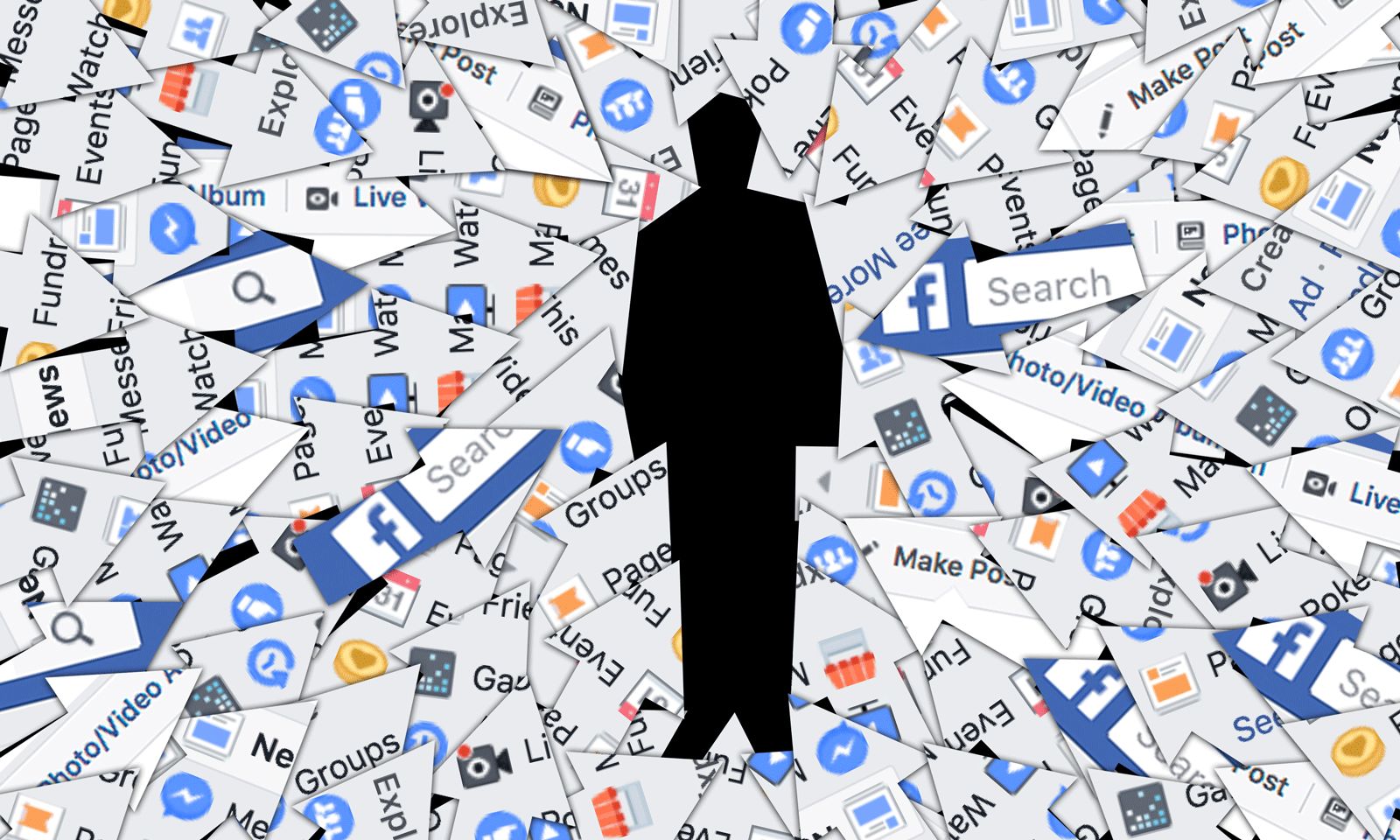
Facebook’s ‘People You May Know’ feature can be really creepy. How does it work? – Recode

When Facebook’s Android app apparently accessed my camera without my permission I banned it from my phone. This story might drive me from Facebook altogether.

This upcoming year will see me drastically curtail my Facebook usage. There are so many other things I can be doing than scrolling through cat photos, and also I am not convinced the information I share is always going to be used to my benefit.

Facebook has a pretty clear and straightforward company mission: Connect everybody in the world.

One of the ways it carries out that mission is by recommending new friends for you every time you open the app or website — essentially, the company identifies other people on Facebook that it thinks you already know, and nudges you to connect with them inside Facebook’s walls.

The problem with this feature is that it can be really creepy.

Facebook previously employed user locations to recommend friends, but says it has stopped doing that; Fusion recently wrote about a psychiatrist who claims her mental health patients were being prompted to connect with one another on the service. Not good.

When my colleague Jason Del Rey and I recently experienced a number of oddly timed recommendations, we started to get curious ourselves. How does Facebook generate these eerily coincidental recommendations?

Source: Facebook’s ‘People You May Know’ feature can be really creepy. How does it work? – Recode

How Facebook Figures Out Everyone You’ve Ever Met

In real life, in the natural course of conversation, it is not uncommon to talk about a person you may know. You meet someone and say, “I’m from Sarasota,” and they say, “Oh, I have a grandparent in Sarasota,” and they tell you where they live and their name, and you may or may not recognize them.

You might assume Facebook’s friend recommendations would work the same way: You tell the social network who you are, and it tells you who you might know in the online world. But Facebook’s machinery operates on a scale far beyond normal human interactions. And the results of its People You May Know algorithm are anything but obvious. In the months I’ve been writing about PYMK, as Facebook calls it, I’ve heard more than a hundred bewildering anecdotes:

  • A man who years ago donated sperm to a couple, secretly, so they could have a child—only to have Facebook recommend the child as a person he should know. He still knows the couple but is not friends with them on Facebook.
  • A social worker whose client called her by her nickname on their second visit, because she’d shown up in his People You May Know, despite their not having exchanged contact information.
  • A woman whose father left her family when she was six years old—and saw his then-mistress suggested to her as a Facebook friend 40 years later.
  • An attorney who wrote: “I deleted Facebook after it recommended as PYMK a man who was defense counsel on one of my cases. We had only communicated through my work email, which is not connected to my Facebook, which convinced me Facebook was scanning my work email.”

Connections like these seem inexplicable if you assume Facebook only knows what you’ve told it about yourself. They’re less mysterious if you know about the other file Facebook keeps on you—one that you can’t see or control.

Source: How Facebook Figures Out Everyone You’ve Ever Met

Climate change:NC teens petition NC environment commission to cut fossil fuel and greenhouse gases | News & Observer

News broke today that Hallie is trying again, this time with friends, to get North Carolina’s environment back on track. Go, Hallie!

Hallie Turner was 13 years old when she stood outside a Wake County courtroom telling media crews with cameras trained on her that she planned to continue to fight for action on climate change despite her unsuccessful attempt to sue North Carolina over its environmental rules.

Now 15, Hallie is trying again to get the state Department of Environmental Quality and the state Environmental Management Commission to adopt a rule calling for a sharp reduction in emissions of carbon dioxide and other greenhouse gases over the next three decades. This time, two other North Carolina teens — Emily Liu, 16, of Chapel Hill, and Arya Pontula, a Raleigh 17-year-old, will join Hallie in petitioning the commission.

With the help of Ryke Longest at the Duke Environmental Law and Policy Clinic, and Our Children’s Trust, a Oregon-based nonprofit focused on climate change, the teens hope to persuade the state to adopt a rule ensuring that by 2050 carbon dioxide emissions would be down to zero.

“It would be a future in which you would not be burning fossil fuels to power your homes,” Longest said on Monday, the day before the teens plan to file their petition.

Source: Climate change:NC teens petition NC environment commission to cut fossil fuel and greenhouse gases | News & Observer

‘The strangest supernova we’ve ever seen’: A star that keeps exploding — and surviving – The Washington Post

An astonishing astronomical event is taking place. We are constantly shown that we have only the slightest idea of how the universe really works.

Some 500 million light-years away, in a galaxy so distant it looks like little more than a smudge, a star exploded five times over the course of nearly two years, spewing the contents of 50 Jupiters and emitting as much energy as 10 quintillion suns.

This isn’t even the first time this star has gone supernova: Astronomers believe this same body was seen exploding 60 years ago.

Somehow, this “zombie” star has managed to survive one of the most powerful, destructive events known to science — multiple times. It should make us question, researchers wrote Wednesday in the journal Nature, how much we really know about supernovas.

Source: ‘The strangest supernova we’ve ever seen’: A star that keeps exploding — and surviving – The Washington Post

Bonus link to ARS Technica article with juicy astronomy details on this event.

Why Nerds and Nurses Are Taking Over the U.S. Economy – The Atlantic

Manufacturing will fall. Retail will wobble. Automation will inch along but stay off the roads, for now. The rich will keep getting richer. And more and more of the country will be paid to take care of old people. That is the future of the labor market, according to the latest 10-year forecast from the Bureau of Labor Statistics.

These 10-year forecasts—the products of two years’ work from about 25 economists at the BLS —document the government’s best assessment of the fastest and slowest growing jobs of the future. On the decline are automatable work, like typists, and occupations threatened by changing consumer behavior, like clothing store cashiers, as more people shop online.

The fastest-growing jobs through 2026 belong to what one might call the Three Cs: care, computers, and clean energy. No occupation is projected to add more workers than personal-care aides, who perform non-medical duties for older Americans, such as bathing and cooking. Along with home-health aides, these two occupations are projected to create 1.1 million new jobs in the next decade. Remarkably, that’s 10 percent of the total 11.5 million jobs that the BLS expects the economy to add. Clean-energy workers, like solar-panel installers and wind-turbine technicians, are the only occupations that are expected to double by 2026. Mathematicians and statisticians round out the top-10 list.

Source: Why Nerds and Nurses Are Taking Over the U.S. Economy – The Atlantic

Addicted to Your iPhone? You’re Not Alone – The Atlantic

n a recent evening in San Francisco, Tristan Harris, a former product philosopher at Google, took a name tag from a man in pajamas called “Honey Bear” and wrote down his pseudonym for the night: “Presence.”

Harris had just arrived at Unplug SF, a “digital detox experiment” held in honor of the National Day of Unplugging, and the organizers had banned real names. Also outlawed: clocks, “w-talk” (work talk), and “WMDs” (the planners’ loaded shorthand for wireless mobile devices). Harris, a slight 32-year-old with copper hair and a tidy beard, surrendered his iPhone, a device he considers so addictive that he’s called it “a slot machine in my pocket.” He keeps the background set to an image of Scrabble tiles spelling out the words face down, a reminder of the device’s optimal position.

I followed him into a spacious venue packed with nearly 400 people painting faces, filling in coloring books, and wrapping yarn around chopsticks. Despite the cheerful summer-camp atmosphere, the event was a reminder of the binary choice facing smartphone owners, who, according to one study, consult their device 150 times a day: Leave the WMD on and deal with relentless prompts compelling them to check its screen, or else completely disconnect. “It doesn’t have to be the all-or-nothing choice,” Harris told me after taking in the arts-and-crafts scene. “That’s a design failure.”

Harris is the closest thing Silicon Valley has to a conscience. As the co?founder of Time Well Spent, an advocacy group, he is trying to bring moral integrity to software design: essentially, to persuade the tech world to help us disengage more easily from its devices.

Source: Addicted to Your iPhone? You’re Not Alone – The Atlantic

‘The ravages of cord-cutting’: AT&T’s race against time to save its TV business – The Washington Post

Traditional TV is dying.

On Wednesday, AT&T told regulators that it expects to finish the quarter with about 90,000 fewer TV subscribers than it began with. AT&T blamed a number of issues, including hurricane damage to infrastructure, rising credit standards and competition from rivals. The report also shows AT&T lost more traditional TV customers than it gained back through its online video app, DirecTV Now. And analysts are suggesting that that’s evidence that cord-cutting is the main culprit.

Announced last year, DirecTV Now was AT&T’s answer to Netflix and Hulu. AT&T initially sought to drive aggressive adoption by offering deep discounts, and it bundled it with unlimited data plans for cellphone users.

While those efforts have helped offset losses in DirecTV’s main satellite-based service, it’s that traditional TV package that remains the most lucrative product for providers. Streaming apps don’t do as much to bolster the bottom line — meaning AT&T would be in tough shape even if it were replacing TV subscribers on a one-to-one basis with digital app users, which it isn’t.

Source: ‘The ravages of cord-cutting’: AT&T’s race against time to save its TV business – The Washington Post

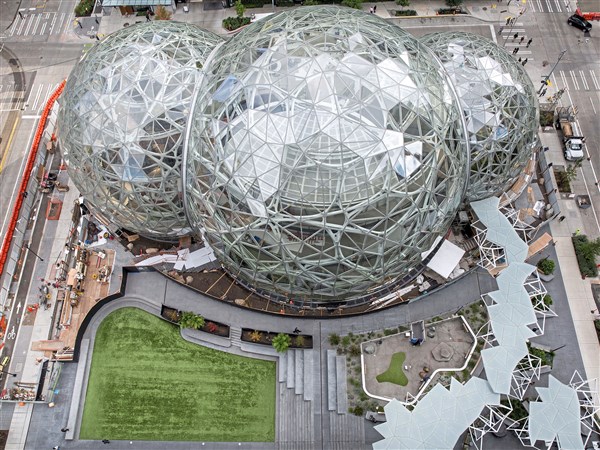
Seattle brewed: Amazon’s rapid growth transforms a city — but it’s complicated | Pittsburgh Post-Gazette

A cautionary tale for those cities vying to be the second headquarters of Amazon. Raleigh, be careful what you wish for.

“Seattle was a great place to live before Amazon. If you can afford it, it’s a great place to live now. That’s the caveat — if you can afford it,” said Knute Berger, a Seattle native and historian who is a columnist for Crosscut.com and editor at large for Seattle Magazine.

Mr. Berger wrote a commentary for Crosscut titled “Bidder beware,” warning the countless cities, including Pittsburgh, competing for a shot at Amazon’s second headquarters and its promise of 50,000 jobs that they may end up with more than they bargained for.

“That sounds crazy because of the success of the company. But Amazon has come with costs, too, for the community. Not everyone is a winner in the Amazon economy,” he said.

Source: Seattle brewed: Amazon’s rapid growth transforms a city — but it’s complicated | Pittsburgh Post-Gazette

‘Our minds can be hijacked’: the tech insiders who fear a smartphone dystopia | Technology | The Guardian

“Everyone is distracted. All of the time.”

A decade after he stayed up all night coding a prototype of what was then called an “awesome” button, Rosenstein belongs to a small but growing band of Silicon Valley heretics who complain about the rise of the so-called “attention economy”: an internet shaped around the demands of an advertising economy.These refuseniks are rarely founders or chief executives, who have little incentive to deviate from the mantra that their companies are making the world a better place. Instead, they tend to have worked a rung or two down the corporate ladder: designers, engineers and product managers who, like Rosenstein, several years ago put in place the building blocks of a digital world from which they are now trying to disentangle themselves. “It is very common,” Rosenstein says, “for humans to develop things with the best of intentions and for them to have unintended, negative consequences.”

Rosenstein, who also helped create Gchat during a stint at Google, and now leads a San Francisco-based company that improves office productivity, appears most concerned about the psychological effects on people who, research shows, touch, swipe or tap their phone 2,617 times a day.

There is growing concern that as well as addicting users, technology is contributing toward so-called “continuous partial attention”, severely limiting people’s ability to focus, and possibly lowering IQ. One recent study showed that the mere presence of smartphones damages cognitive capacity – even when the device is turned off. “Everyone is distracted,” Rosenstein says. “All of the time.”

Source: ‘Our minds can be hijacked’: the tech insiders who fear a smartphone dystopia | Technology | The Guardian