We’re With Stupid – The New York Times

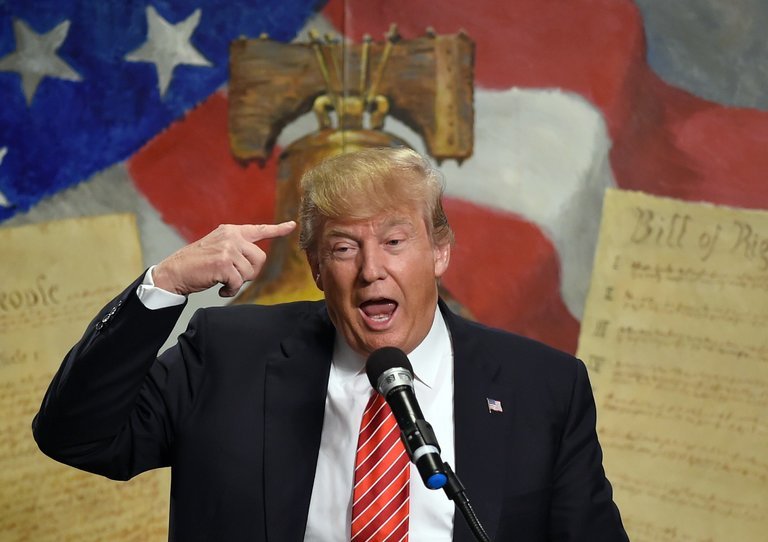
The Trump Presidency isn’t the fault of Hillary, or Bernie, or the Russians. It’s totally the collective fault of America.

Nearly one in three Americans cannot name a single branch of government. When NPR tweeted out sections of the Declaration of Independence last year, many people were outraged. They mistook Thomas Jefferson’s fighting words for anti-Trump propaganda.Fake news is a real thing produced by active disseminators of falsehoods. Trump uses the term to describe anything he doesn’t like, a habit now picked up by political liars everywhere.

But Trump is a symptom; the breakdown in this democracy goes beyond the liar in chief. For that you have to blame all of us: we have allowed the educational system to become negligent in teaching the owner’s manual of citizenship.
Source: We’re With Stupid – The New York Times

GOP Tax Bill Is The End Of All Economic Sanity In Washington

That liberal rag Forbes takes aim at the proposed GOP tax plan.

No doubt many of you read the above headline and immediately started to tweet that the GOP tax bill can’t be the end of economic sanity in Washington because there never was any to begin with.I have two responses.

First…please do tweet that, and link to this post when you do.

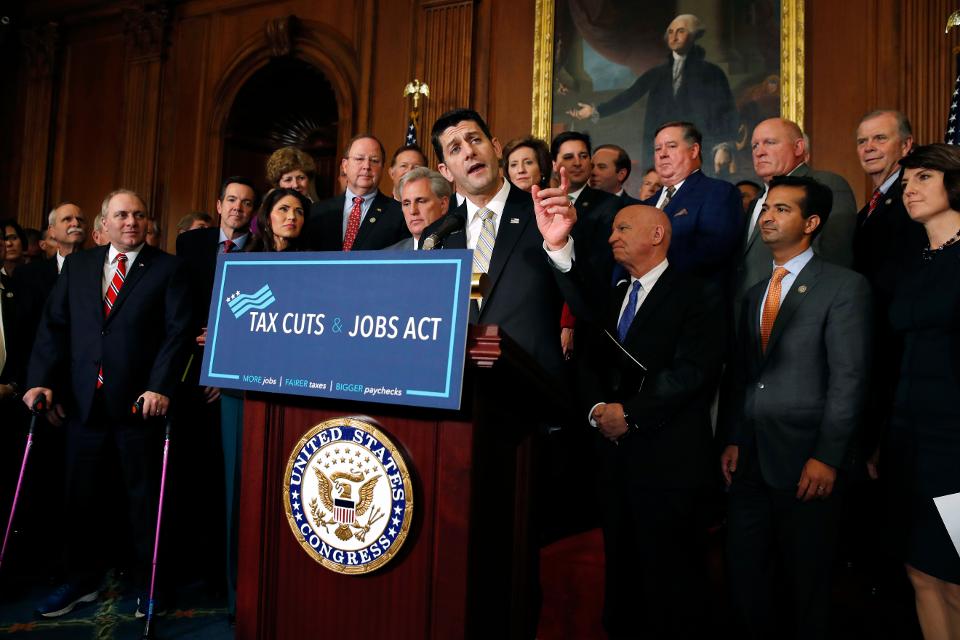
Second…you’re wrong. If it’s enacted, the GOP tax cut now working its way through Congress will be the start of a decades-long economic policy disaster unlike any other that has occurred in American history.

Source: GOP Tax Bill Is The End Of All Economic Sanity In Washington

The Scary New Evidence on BPA-Free Plastics – Mother Jones

Yikes!

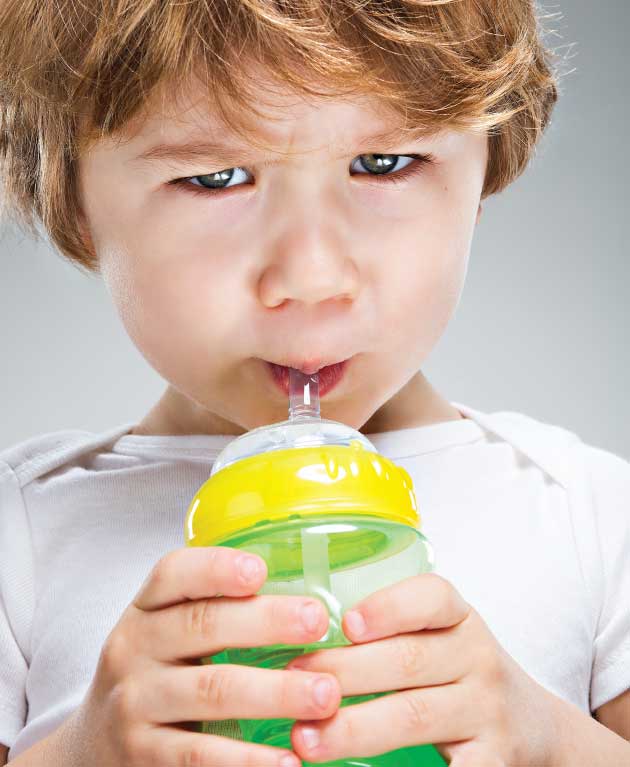
The center shipped Juliette’s plastic cup, along with 17 others purchased from Target, Walmart, and Babies R Us, to CertiChem, a lab in Austin, Texas. More than a quarter—including Juliette’s—came back positive for estrogenic activity. These results mirrored the lab’s findings in its broader National Institutes of Health-funded research on BPA-free plastics. CertiChem and its founder, George Bittner, who is also a professor of neurobiology at the University of Texas-Austin, had recently coauthored a paper in the NIH journal Environmental Health Perspectives. It reported that “almost all” commercially available plastics that were tested leached synthetic estrogens—even when they weren’t exposed to conditions known to unlock potentially harmful chemicals, such as the heat of a microwave, the steam of a dishwasher, or the sun’s ultraviolet rays. According to Bittner’s research, some BPA-free products actually released synthetic estrogens that were more potent than BPA.

Source: The Scary New Evidence on BPA-Free Plastics – Mother Jones

Argentina missing submarine: Concern grows after two false alarms – BBC News

It doesn’t matter whose flag under which one serves, a sailor is a sailor and the brotherhood of the sea is a bond we all share. I’m hoping and praying these Argentinian sailors are found safe and sound.

Argentina’s navy says it will take advantage of improved weather conditions to further step up its search for a submarine that vanished last Wednesday in the Atlantic Ocean.

Strong winds and high waves have hampered the search for the ARA San Juan and its 44 crew in the past days.

On Monday, navy officials said that noises picked up by two search vessels did not come from the sub, dashing relatives’ hopes for a speedy rescue.It was the second false alarm.

A navy spokesman had earlier confirmed that satellite signals picked up on Saturday did not come from the missing boat.

Source: Argentina missing submarine: Concern grows after two false alarms – BBC News

Facebook’s ‘People You May Know’ feature can be really creepy. How does it work? – Recode

When Facebook’s Android app apparently accessed my camera without my permission I banned it from my phone. This story might drive me from Facebook altogether.

This upcoming year will see me drastically curtail my Facebook usage. There are so many other things I can be doing than scrolling through cat photos, and also I am not convinced the information I share is always going to be used to my benefit.

Facebook has a pretty clear and straightforward company mission: Connect everybody in the world.

One of the ways it carries out that mission is by recommending new friends for you every time you open the app or website — essentially, the company identifies other people on Facebook that it thinks you already know, and nudges you to connect with them inside Facebook’s walls.

The problem with this feature is that it can be really creepy.

Facebook previously employed user locations to recommend friends, but says it has stopped doing that; Fusion recently wrote about a psychiatrist who claims her mental health patients were being prompted to connect with one another on the service. Not good.

When my colleague Jason Del Rey and I recently experienced a number of oddly timed recommendations, we started to get curious ourselves. How does Facebook generate these eerily coincidental recommendations?

Source: Facebook’s ‘People You May Know’ feature can be really creepy. How does it work? – Recode

How Facebook Figures Out Everyone You’ve Ever Met

In real life, in the natural course of conversation, it is not uncommon to talk about a person you may know. You meet someone and say, “I’m from Sarasota,” and they say, “Oh, I have a grandparent in Sarasota,” and they tell you where they live and their name, and you may or may not recognize them.

You might assume Facebook’s friend recommendations would work the same way: You tell the social network who you are, and it tells you who you might know in the online world. But Facebook’s machinery operates on a scale far beyond normal human interactions. And the results of its People You May Know algorithm are anything but obvious. In the months I’ve been writing about PYMK, as Facebook calls it, I’ve heard more than a hundred bewildering anecdotes:

  • A man who years ago donated sperm to a couple, secretly, so they could have a child—only to have Facebook recommend the child as a person he should know. He still knows the couple but is not friends with them on Facebook.
  • A social worker whose client called her by her nickname on their second visit, because she’d shown up in his People You May Know, despite their not having exchanged contact information.
  • A woman whose father left her family when she was six years old—and saw his then-mistress suggested to her as a Facebook friend 40 years later.
  • An attorney who wrote: “I deleted Facebook after it recommended as PYMK a man who was defense counsel on one of my cases. We had only communicated through my work email, which is not connected to my Facebook, which convinced me Facebook was scanning my work email.”

Connections like these seem inexplicable if you assume Facebook only knows what you’ve told it about yourself. They’re less mysterious if you know about the other file Facebook keeps on you—one that you can’t see or control.

Source: How Facebook Figures Out Everyone You’ve Ever Met

New “Quad9” DNS service blocks malicious domains for everyone | Ars Technica

The Global Cyber Alliance (GCA)—an organization founded by law enforcement and research organizations to help reduce cyber-crime—has partnered with IBM and Packet Clearing House to launch a free public Domain Name Service system. That system is intended to block domains associated with botnets, phishing attacks, and other malicious Internet hosts—primarily targeted at organizations that don’t run their own DNS blacklisting and whitelisting services. Called Quad9 (after the 9.9.9.9 Internet Protocol address the service has obtained), the service works like any other public DNS server (such as Google’s), except that it won’t return name resolutions for sites that are identified via threat feeds the service aggregates daily.

“Anyone anywhere can use it,” said Phil Rettinger, GCA’s president and chief operating officer, in an interview with Ars. The service, he says, will be “privacy sensitive,” with no logging of the addresses making DNS requests—”we will keep only [rough] geolocation data,” he said, for the purposes of tracking the spread of requests associated with particular malicious domains. “We’re anonymizing the data, sacrificing on the side of privacy.”

Source: New “Quad9” DNS service blocks malicious domains for everyone | Ars Technica

3 Major Reasons Why More Millennials Are Starting Blogs

“… sale of advertising can be a real moneymaker.”

Bwahahahahahaha! #unlikely

Millennials see opportunities through blogging. If they gather a solid following, the sale of advertising can be a real moneymaker, and there are a number of millennial bloggers who have successfully monetized their blogs through a number of techniques.

As an example, consider the recent phenomenon of millennial “mommy blogs.” These are smart, educated women who are now at home with children. Blogging is an outlet for them as well as a quick entryway into making a sizeable income. Many of these women spend a year or two building a following. Then, they move into monetizing their blogs and even developing their own product lines, with a loyal and trusting target audience already at their fingertips. Some of the more successful mommy bloggers have achieved incomes as high as $20,000 a month.

Source: 3 Major Reasons Why More Millennials Are Starting Blogs

America’s global influence has dwindled under Donald Trump – Endangered

Many people find reassurance in the sober, capable military men who surround him (see article). His chief of staff, his defence secretary and his national security adviser all understand the horrors of war and will stop him from doing anything rash, the argument goes. Optimists even speculate that he might emulate Ronald Reagan, by shaking up the diplomatic establishment, restoring America’s military muscle and projecting such strength abroad that a frightened, overstretched North Korea will crumble like the Soviet Union. Others confidently predict that even if he causes short-term damage to America’s standing in the world, Mr Trump will be voted out in 2020 and things will return to normal.

All this is wishful thinking.

Source: America’s global influence has dwindled under Donald Trump – Endangered

Paradise Papers: Tax haven secrets of ultra-rich exposed – BBC News

A huge new leak of financial documents has revealed how the powerful and ultra-wealthy, including the Queen’s private estate, secretly invest vast amounts of cash in offshore tax havens.

Donald Trump’s commerce secretary is shown to have a stake in a firm dealing with Russians sanctioned by the US.The leak, dubbed the Paradise Papers, contains 13.4m documents, mostly from one leading firm in offshore finance.BBC Panorama is part of nearly 100 media groups investigating the papers.

As with last year’s Panama Papers leak, the documents were obtained by the German newspaper Süddeutsche Zeitung, which called in the International Consortium of Investigative Journalists (ICIJ) to oversee the investigation. The Guardian is also among the organisations investigating the documents.

Sunday’s revelations form only a small part of a week of disclosures that will expose the tax and financial affairs of some of the hundreds of people and companies named in the data, some with strong UK connections.

Many of the stories focus on how politicians, multinationals, celebrities and high-net-worth individuals use complex structures of trusts, foundations and shell companies to protect their cash from tax officials or hide their dealings behind a veil of secrecy.

Source: Paradise Papers: Tax haven secrets of ultra-rich exposed – BBC News